A proposal for large “cat states” of light on demand, with feedforward instead of luck
Peer-reviewed in Physical Review Research | Proposal
It is a peer-reviewed deterministic route to large optical cat states that needs one atom-cavity reflection plus feedforward, and it quantifies how cavity imperfections limit it.
Our understanding
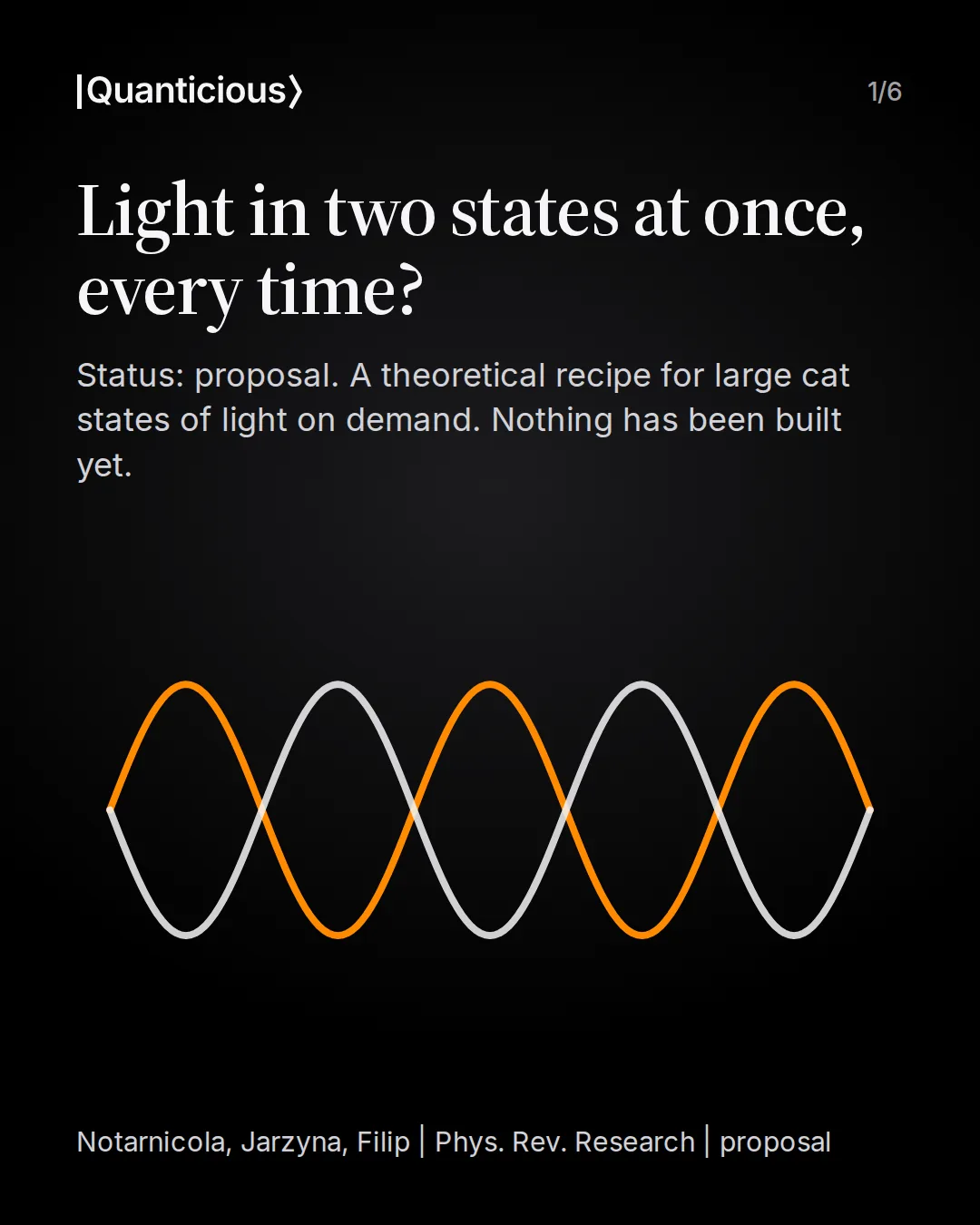
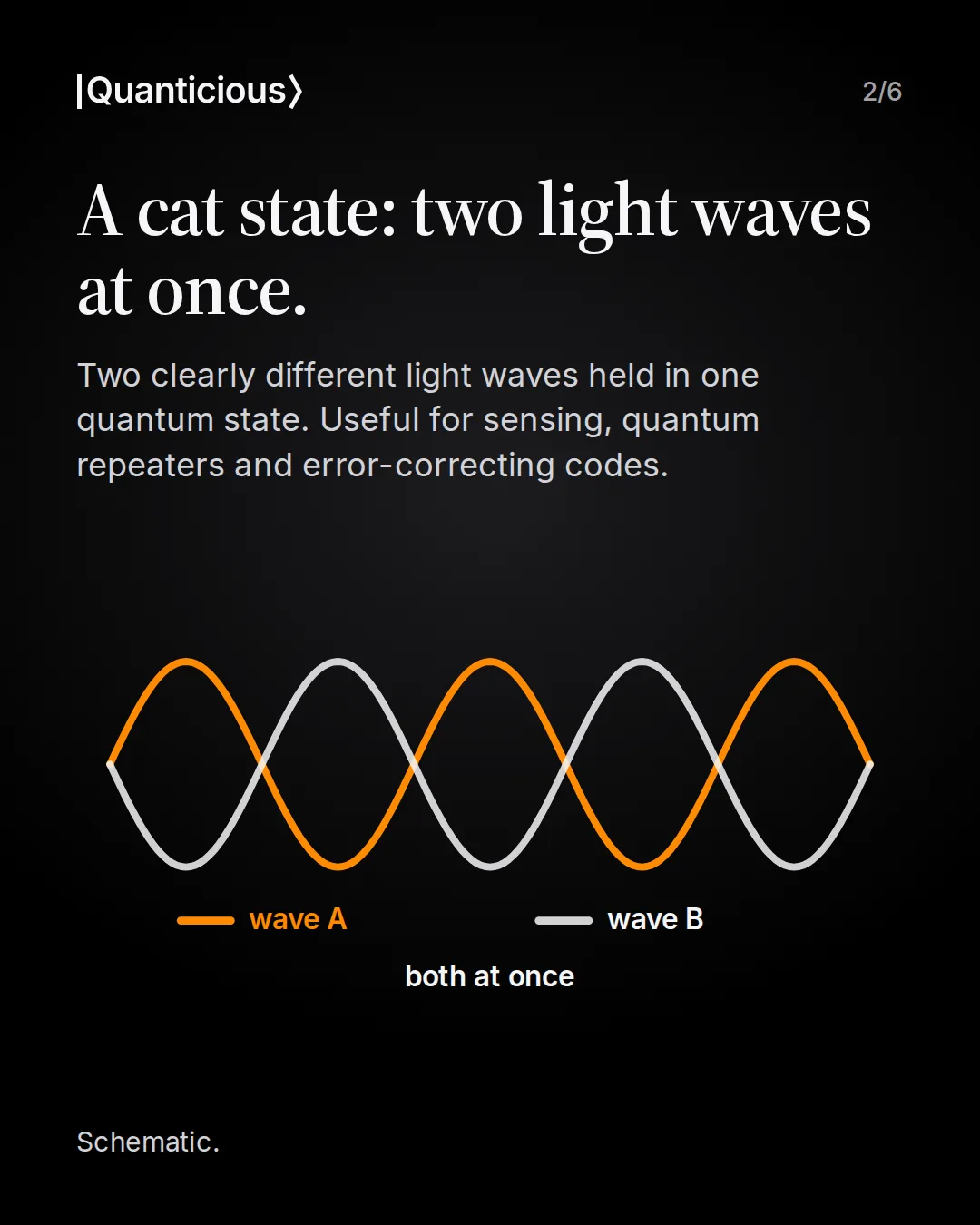
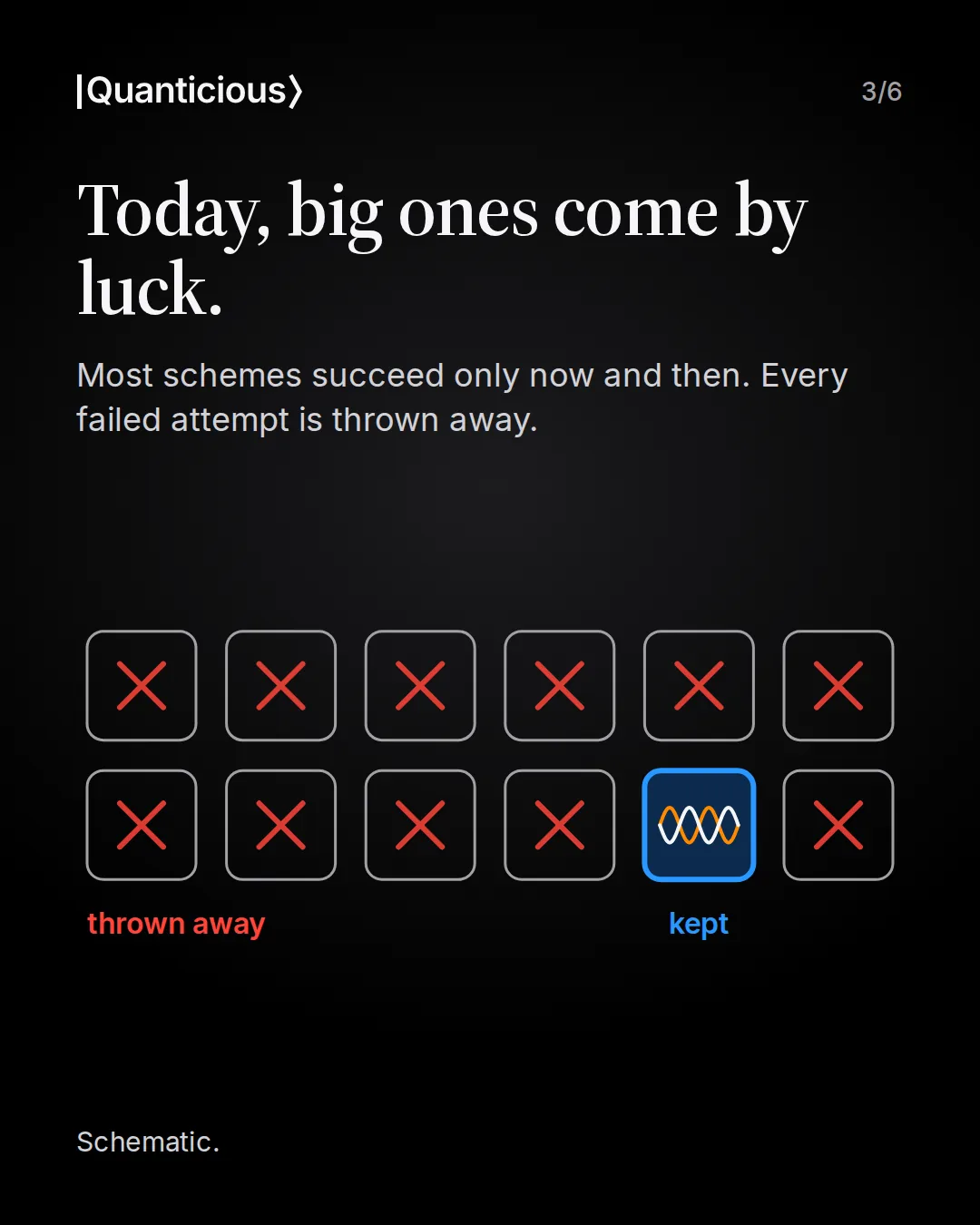
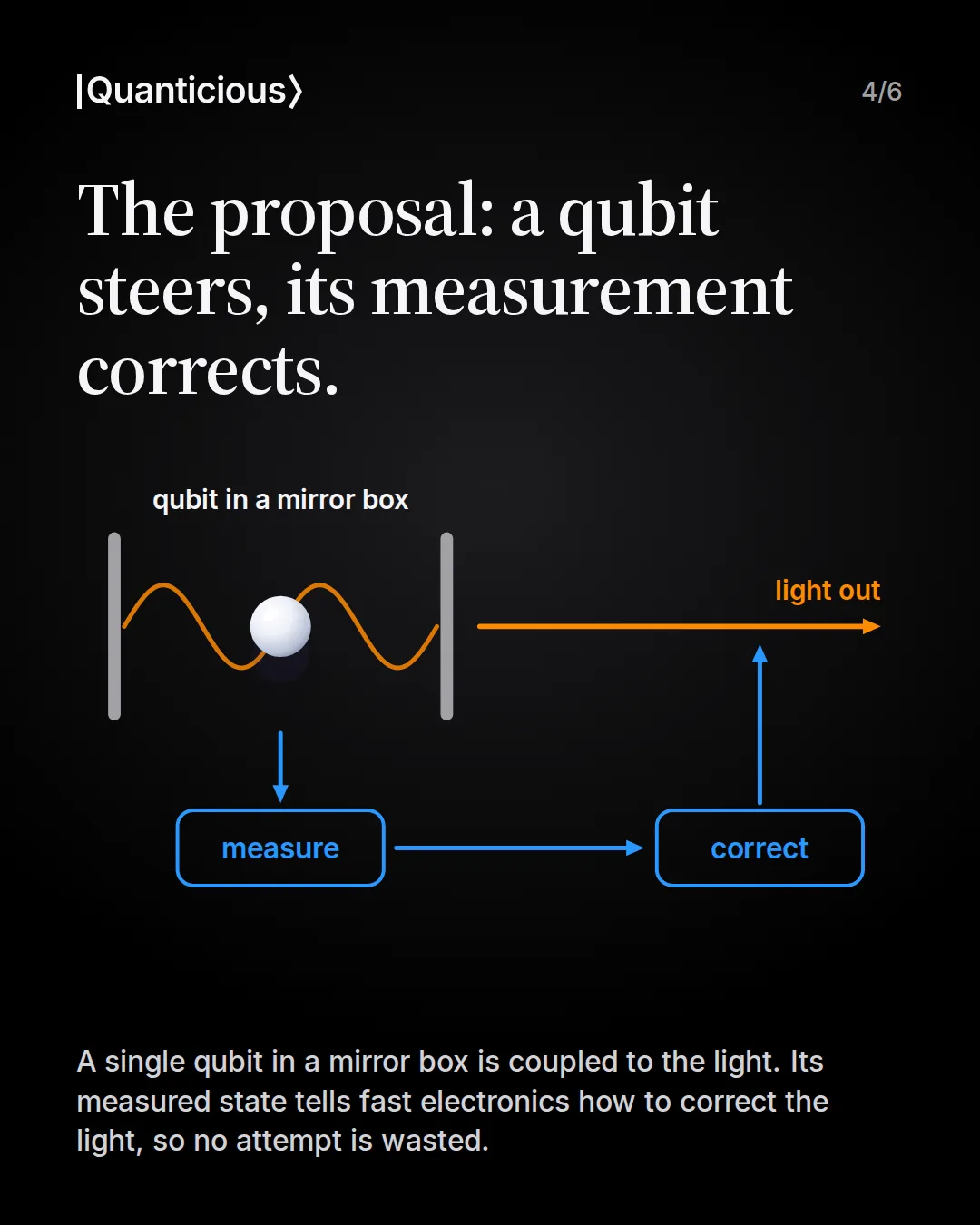
A cat state of light is a light wave that is in two very different states at once, named after Schrödinger’s famous cat. Such states are useful for sensing and for protecting quantum information. Today, large ones are mostly made by luck: you try many times and keep the rare success. The authors propose a recipe that succeeds in every run. A single qubit in a mirror box shapes the light, and its measurement tells fast electronics how to correct the light. The result comes close to the ideal cat state but is not identical, and imperfect mirrors spoil large cats. It is a proposal on paper.
A few papers like this every Monday, free.
Free. Unsubscribe anytime. Privacy
The details
Key number: Ideal fidelity F ≈ 1 − π²/(32α²) for large cat amplitude α in every run, without cavity losses (theory)
What they did
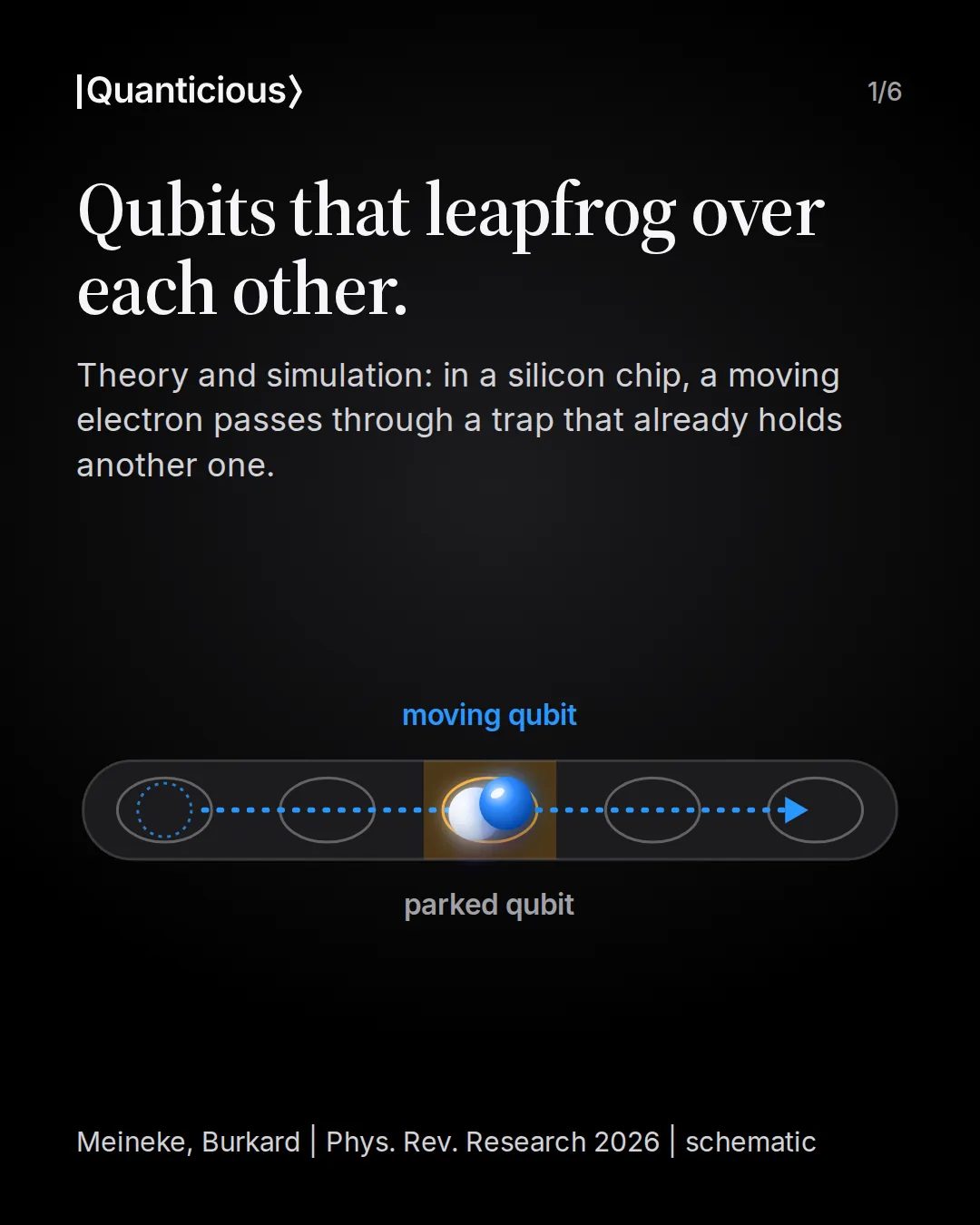
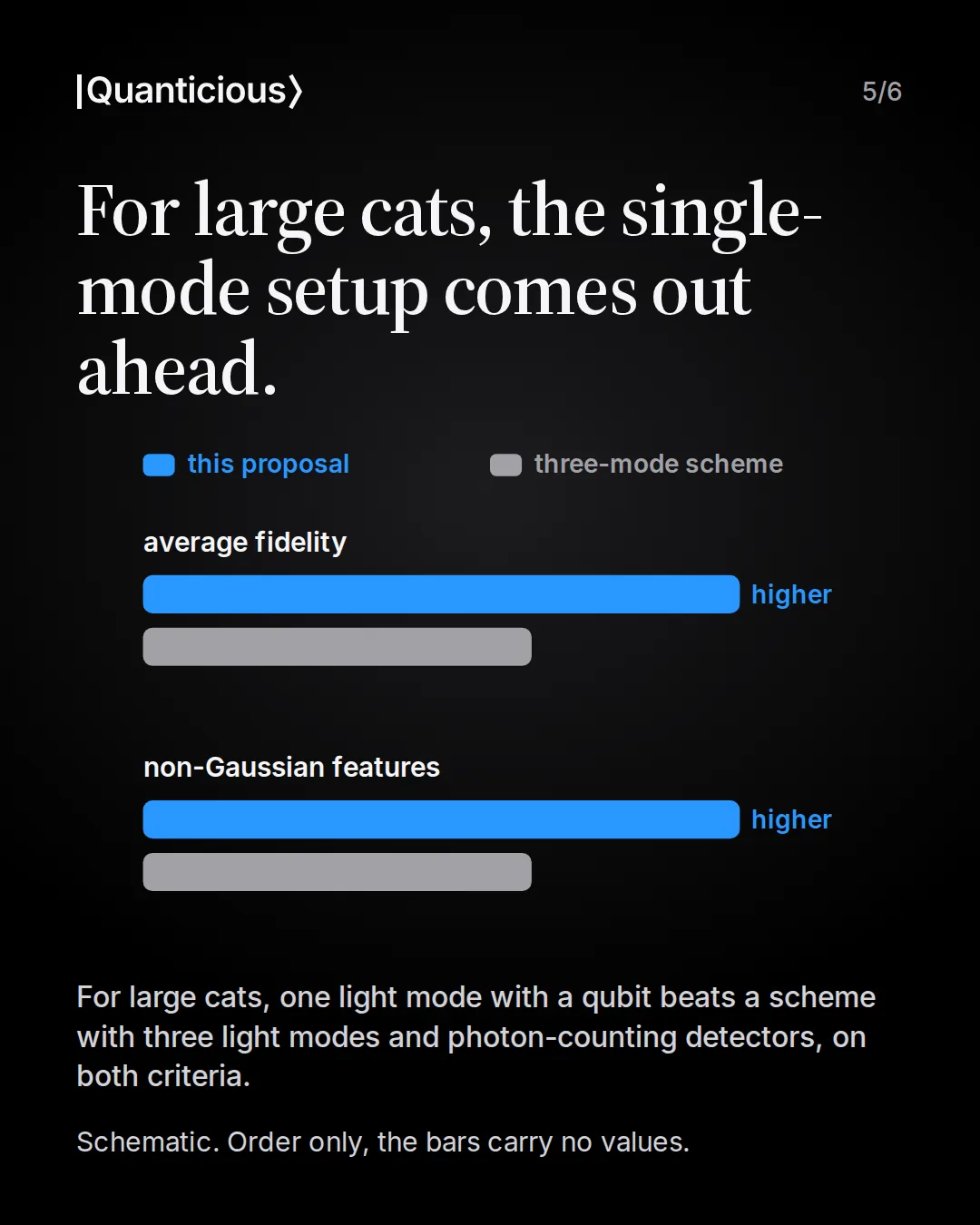
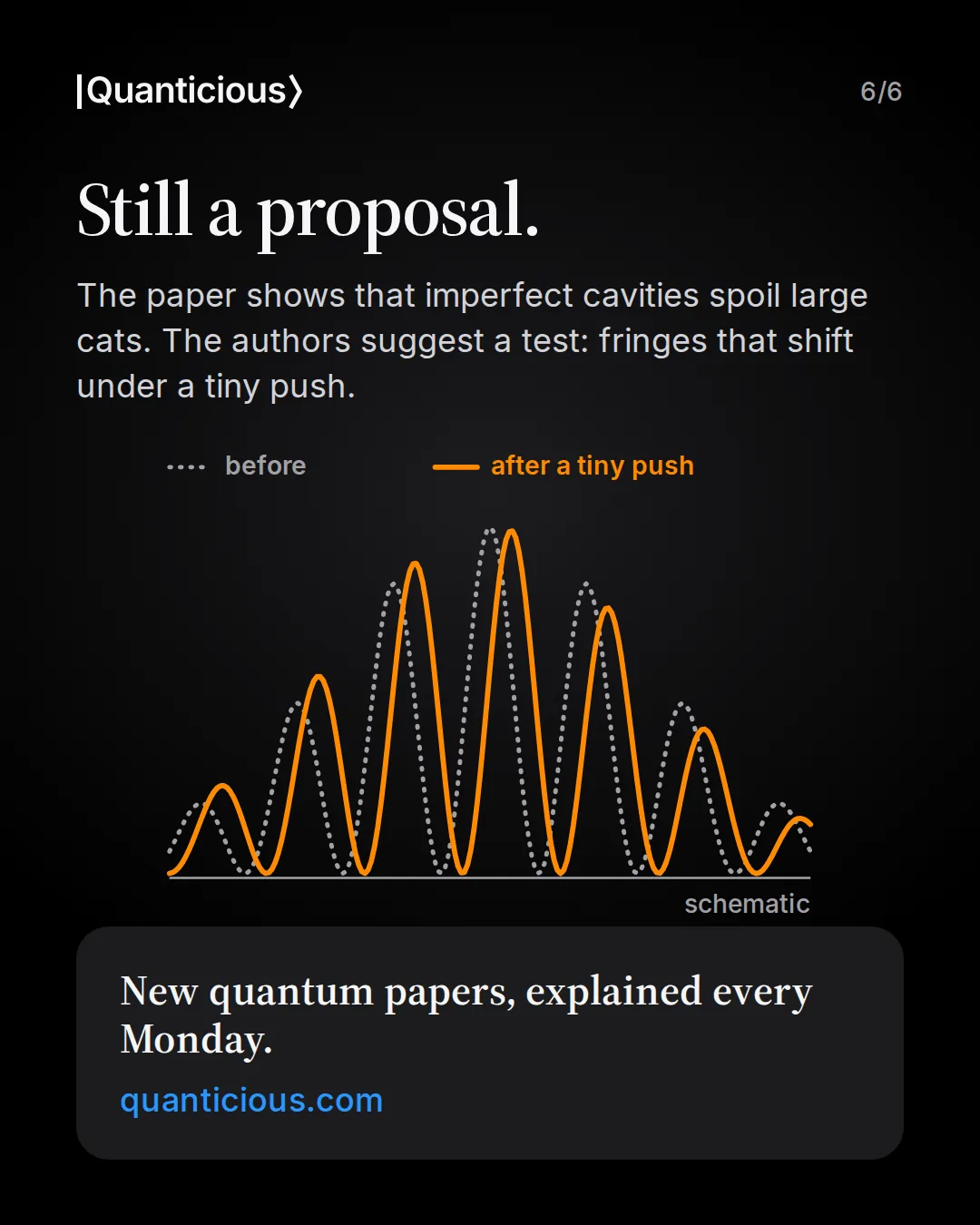
A superposition of two large, distinct light fields, called an optical cat state in the paper, is a resource for quantum sensing, quantum repeaters and bosonic error-correcting codes. Making large ones usually relies on probabilistic schemes. The authors propose a deterministic protocol. A light pulse is reflected from a cavity that holds a single atom acting as a qubit, the qubit is measured, and electro-optical feedforward displaces the light. When the measurement signals the unwanted odd cat, the displacement shifts its interference fringes onto those of the target state. The output is therefore an approximation. In the ideal case its fidelity approaches 1 as 1 − π²/(32α²) for large amplitudes α. For large cats this single-mode protocol beats an optimised three-mode scheme based on Gaussian operations and photon-number-resolving detectors, both in average fidelity and in quantum non-Gaussian features. In that regime the three-mode scheme succeeds in about 7.9 %, 3.0 % or 1.6 % of attempts, depending on how many photons it detects. The authors also propose the sensitivity of interference fringes to weak displacements as a witness of quantum interference.
Why it matters
The paper calls large optical cat states a special challenge. Earlier deterministic cavity schemes need two conditional displacement gates and several reflections from the cavity. This protocol needs one reflection plus feedforward. It is a theoretical proposal, peer-reviewed in Physical Review Research.
What is still open
The paper already models imperfect cavities. With finite cooperativity and escape efficiency below 1, fidelity falls again for large amplitudes, and the sensitivity to small displacements drops back to the classical limit. The authors call error mitigation essential. An experiment is still missing.
The authors note: “imperfect coupling becomes detrimental in the large-amplitude regime” (Section V)