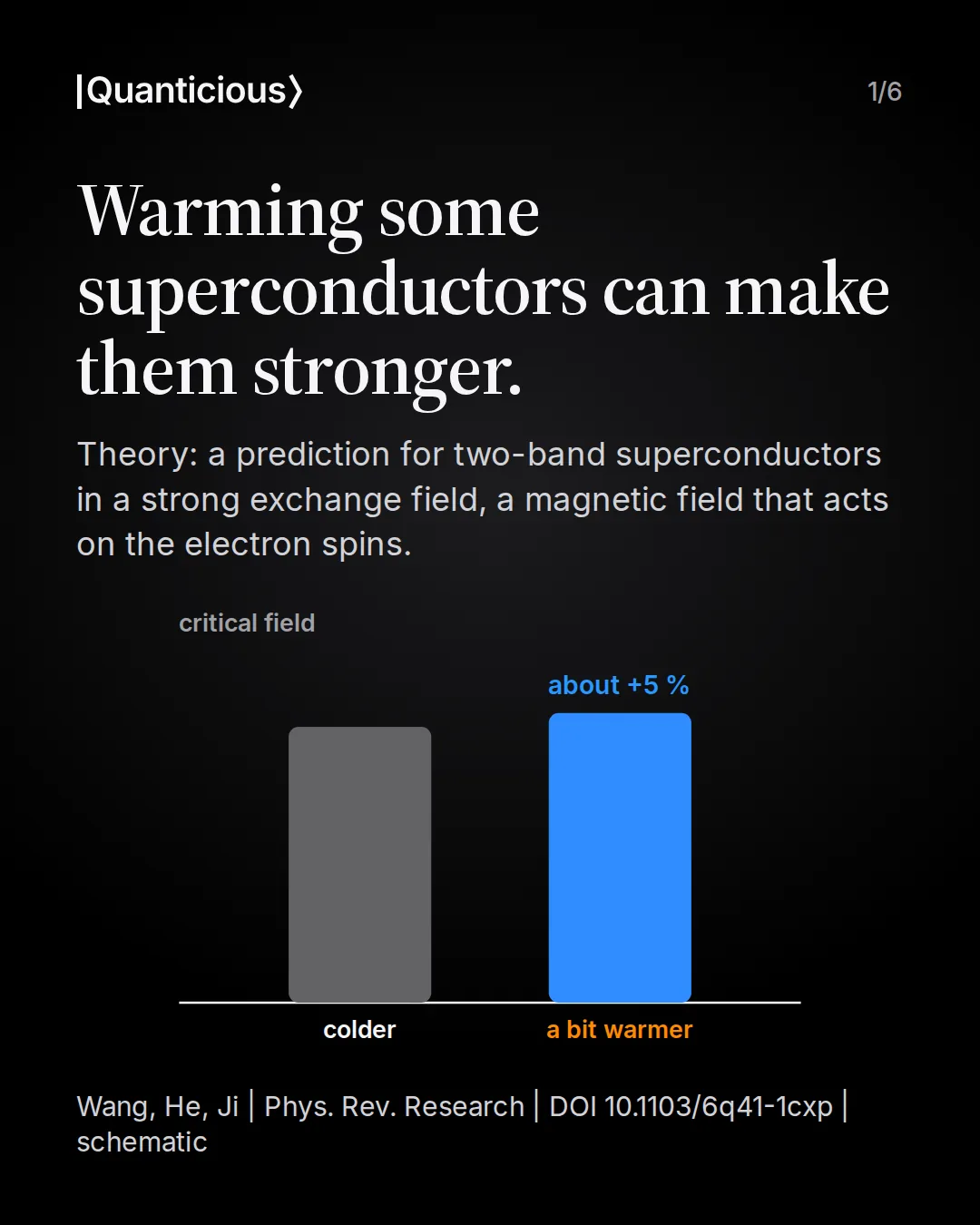
Spin qubits that leapfrog over each other
Peer-reviewed in Physical Review Research | Simulation
It proposes a concrete way to use low-valley-splitting regions of silicon chips, a known obstacle for spin shuttling, and backs it with a full error budget.
Our understanding
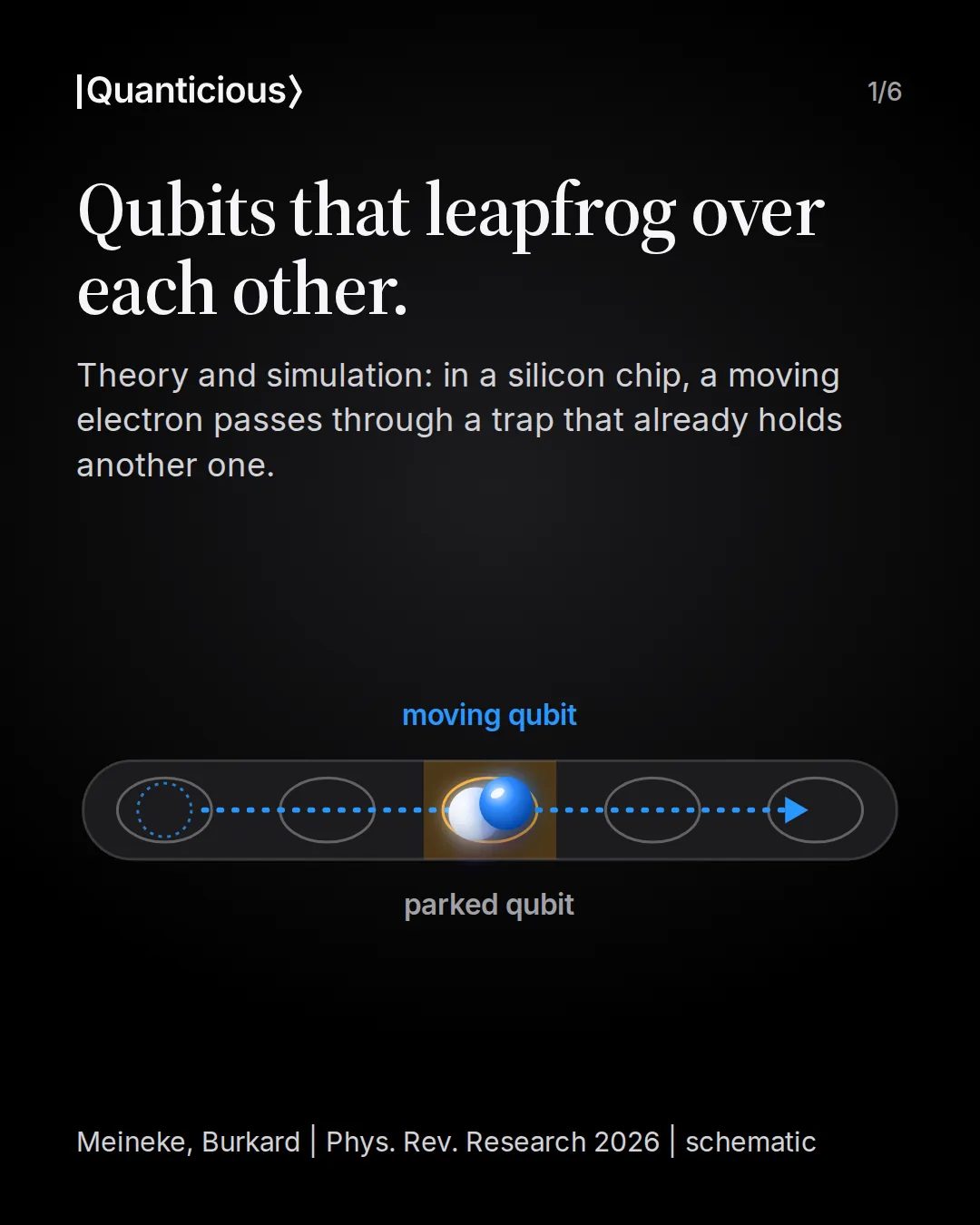
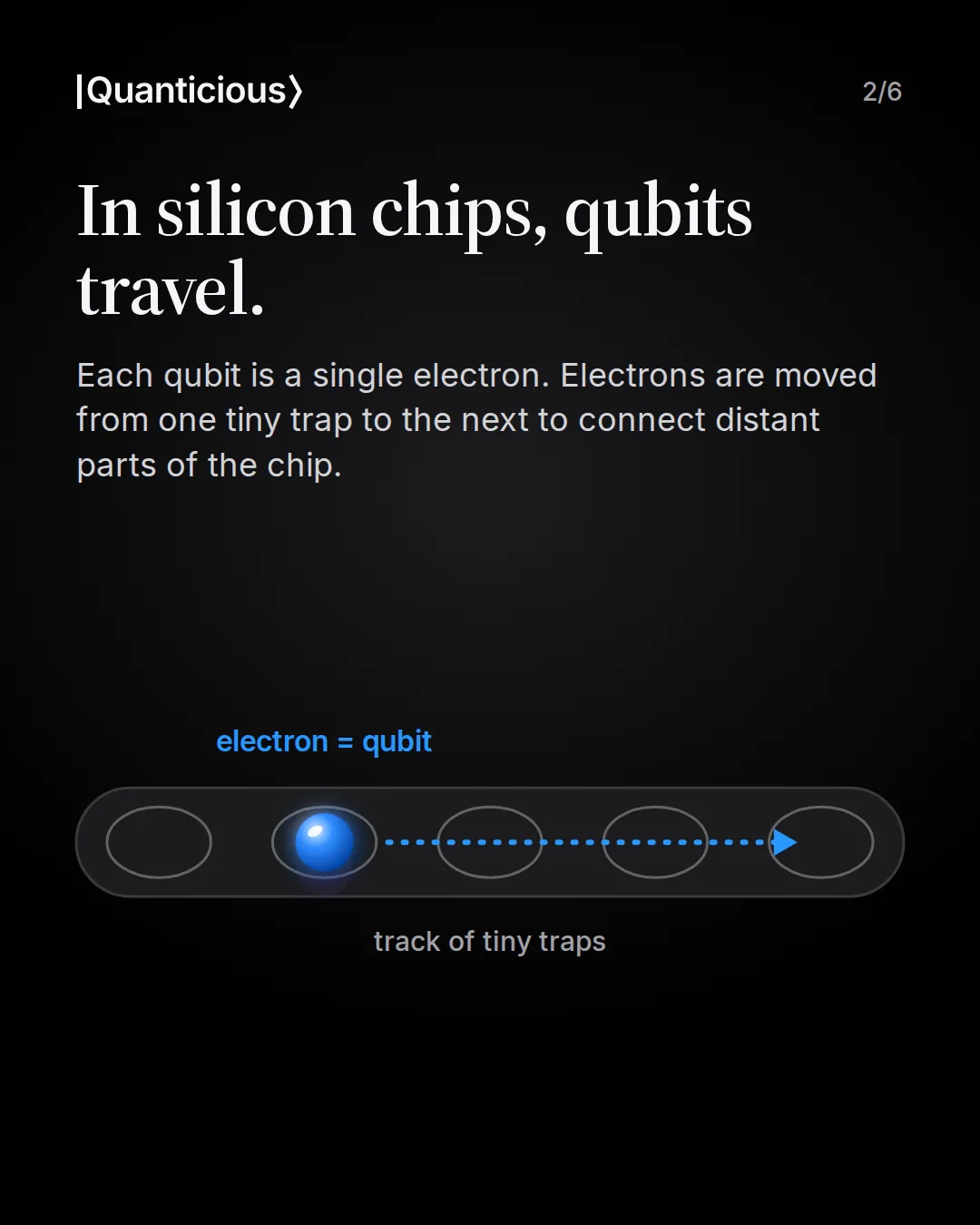
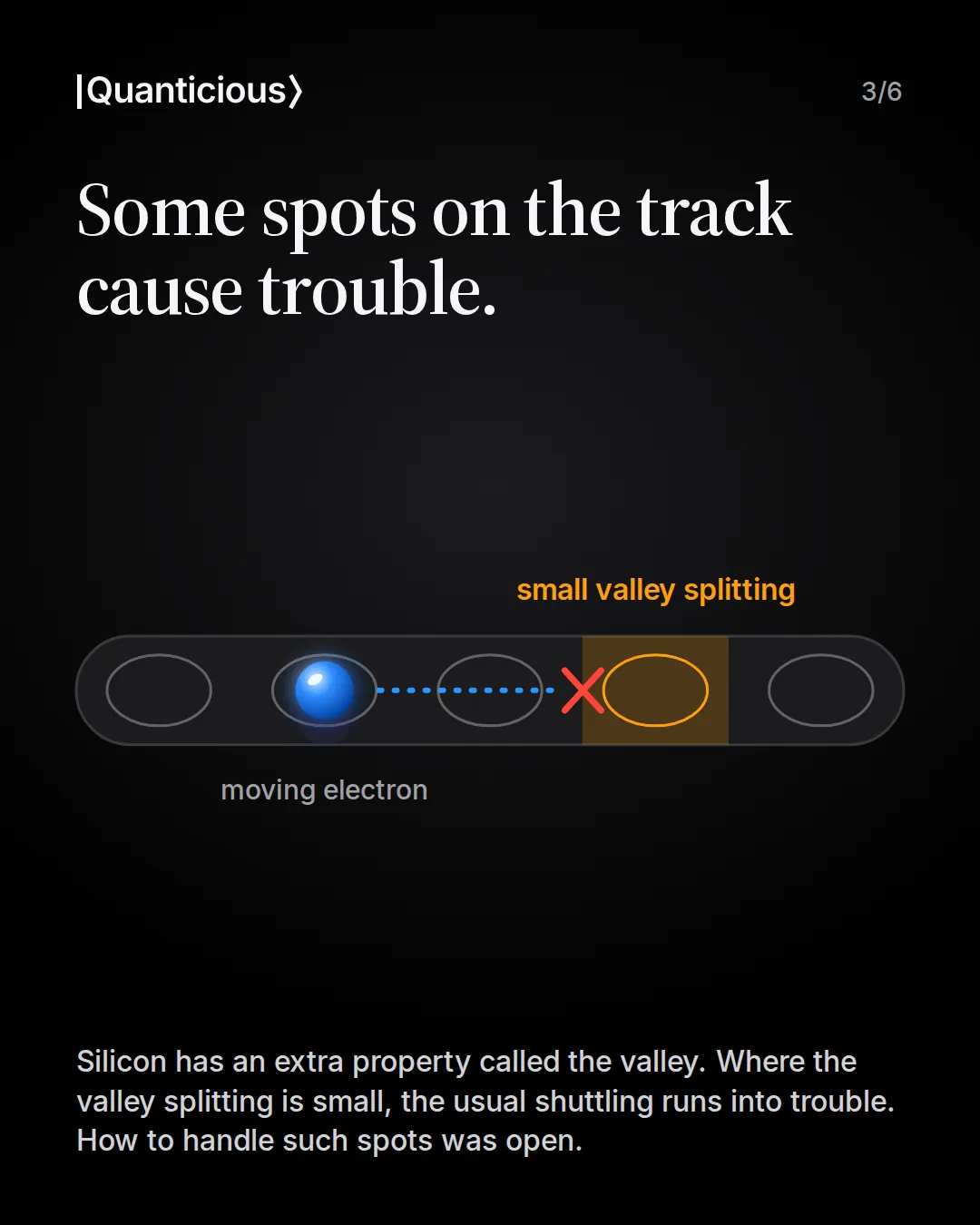
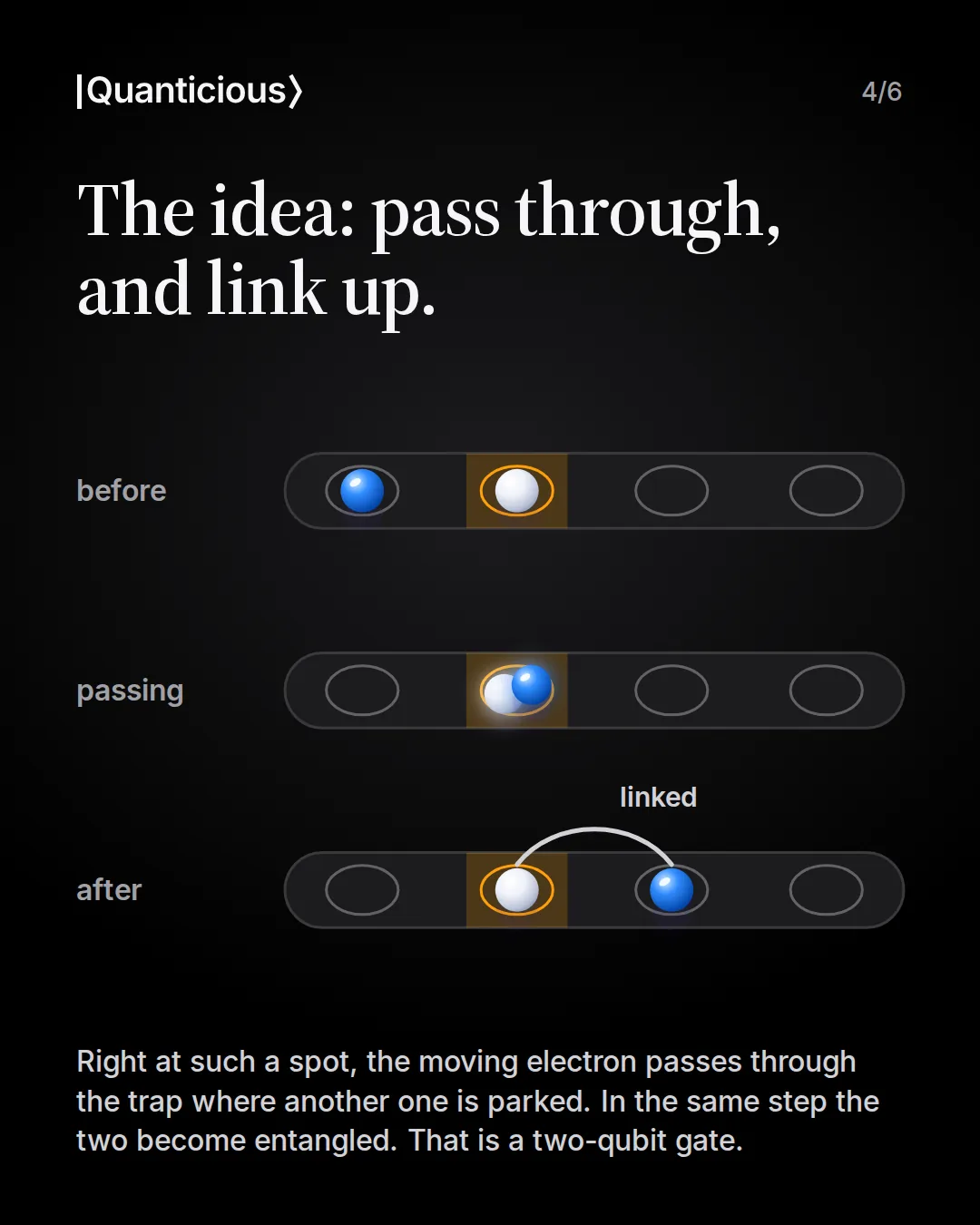
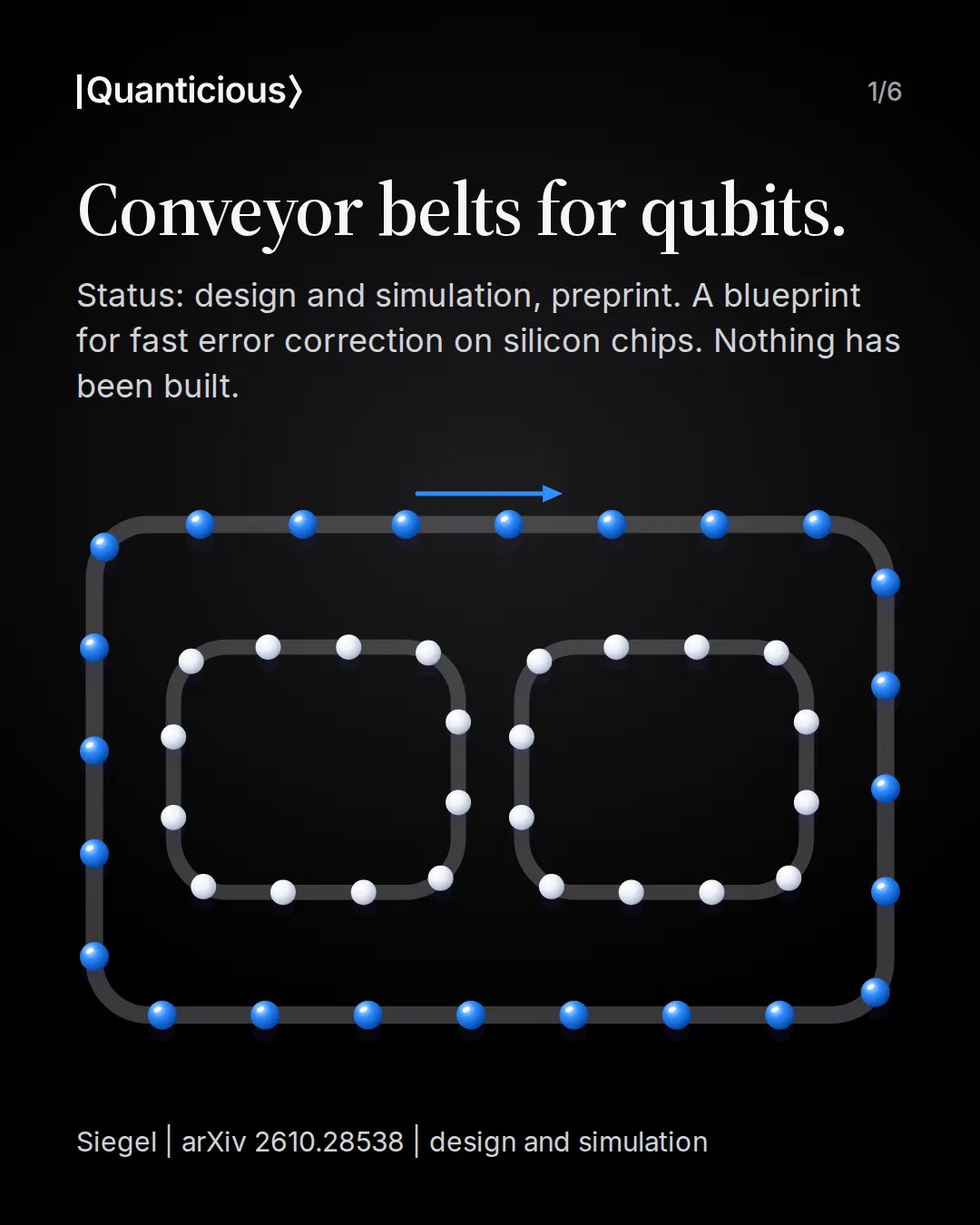
In silicon quantum chips, each qubit is a single electron, and electrons are moved along the chip like cars on a lane. Some spots on the chip are troublesome and are normally avoided. The authors show in simulations that a moving electron can hop over a parked one, right at such a spot. While it passes, the two electrons become linked, which is a basic step of quantum computing. The paper reports no experiment, and the authors expect that current chips could test it.
A few papers like this every Monday, free.
Free. Unsubscribe anytime. Privacy
The details
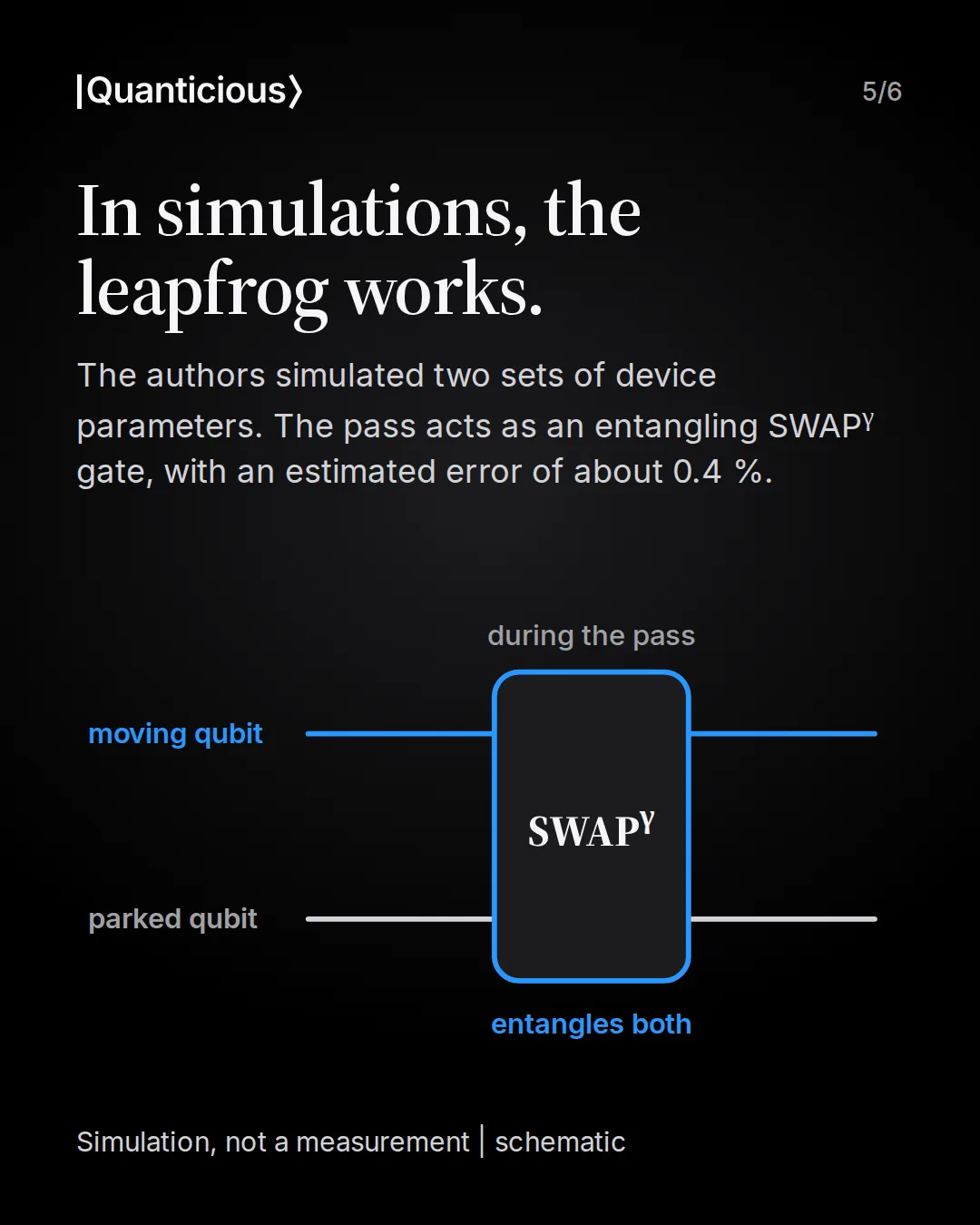
Key number: Estimated gate error of about 0.42 % to 0.45 % (4.20 × 10^-3 and 4.45 × 10^-3 for the two simulated parameter sets, model estimate without error bar), for a middle-dot valley splitting of about 2 µeV and quasistatic charge noise, gate time about 49 to 70 ns
What they did
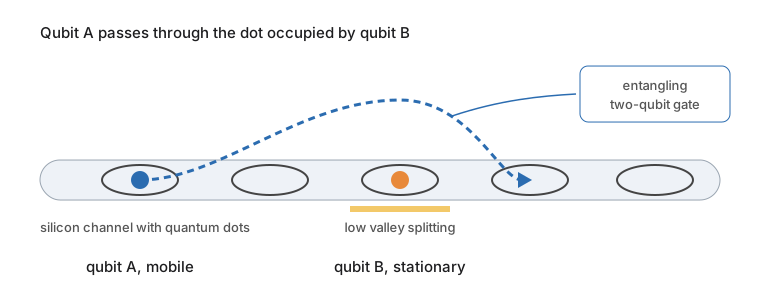
In silicon quantum chips, a qubit is a single electron’s spin, and electrons are moved across the chip (“shuttled”) to connect distant parts of the processor. Silicon has an extra quantum property called the valley degree of freedom. Where the “valley splitting” is small or varies, shuttling risks unwanted excitations, and how to handle such regions has been an open problem. Instead of avoiding them, the authors propose using exactly this valley property to let a moving electron pass through a quantum dot that is already occupied by a stationary electron. For a short time both electrons sit in the same dot. Because of the Pauli principle, the spin-triplet part of the pair then has to occupy the higher valley state, and this energy difference produces an entangling SWAP^γ gate, a fractional SWAP whose power γ is set by how long the moving electron waits in the occupied dot. The authors simulated the process for two realistic sets of device parameters, one symmetric and one asymmetric, including quasistatic charge noise. With a middle-dot valley splitting of about 2 µeV they estimate a gate error of about 0.4 % and a gate time of about 50 to 70 ns.
Why it matters
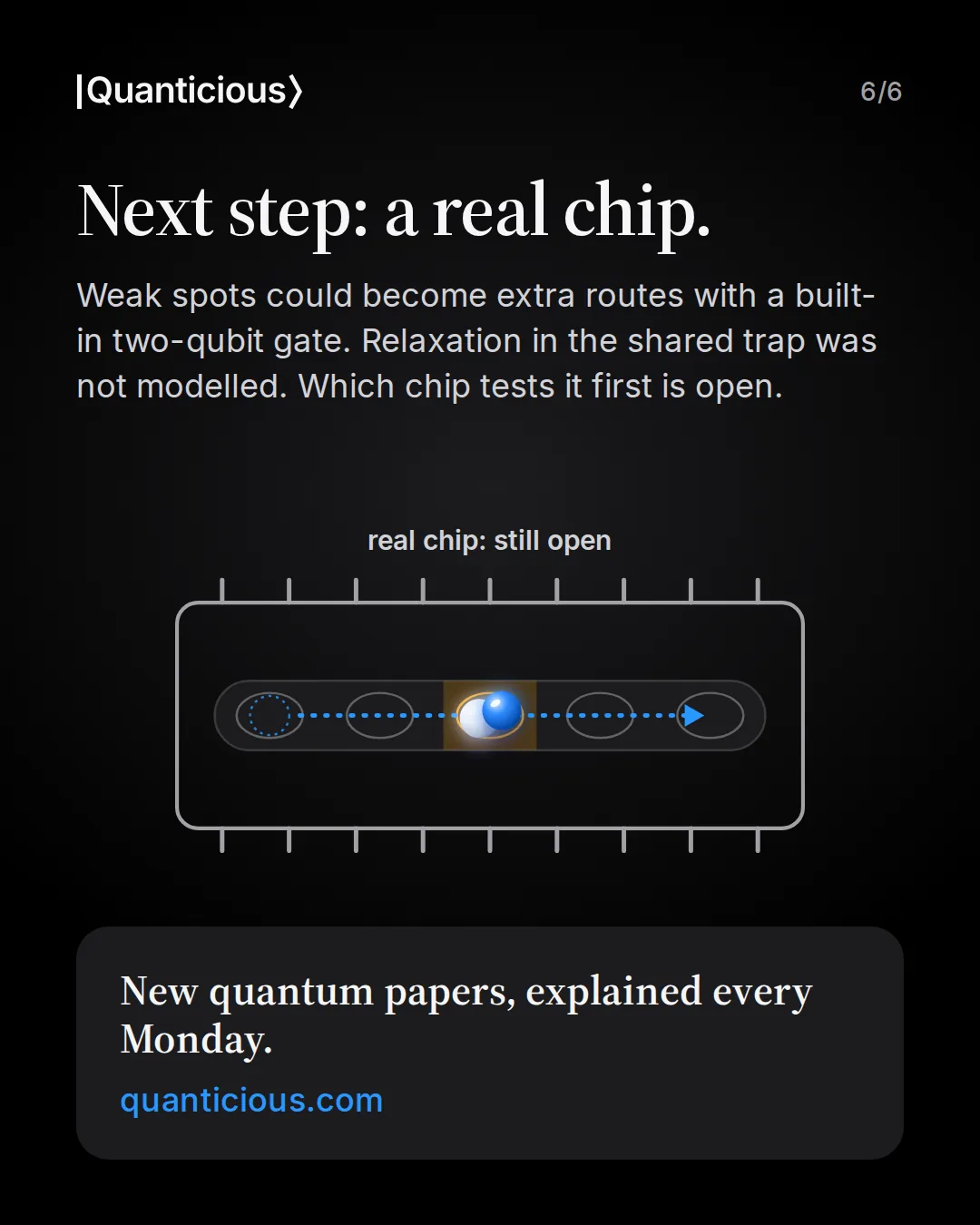
Regions of low valley splitting, which are normally avoided, could become usable. They would add routing paths for shuttled qubits and provide a two-qubit gate that needs no fast control of the tunnel barriers, which the authors say reduces control and wiring overhead.
What is still open
This is theory and simulation. The authors did not model relaxation while both electrons share a dot, they assume no magnetic-field gradient, and they say that noise-driven fluctuations of the valley splitting need further study. Which device will test the leapfrog first?
The authors note: “for the current level of achievable pulse control, the central dot has to lie in a region of low valley splitting to offer reasonably low decoherence levels” (Sec. IV, Conclusions)