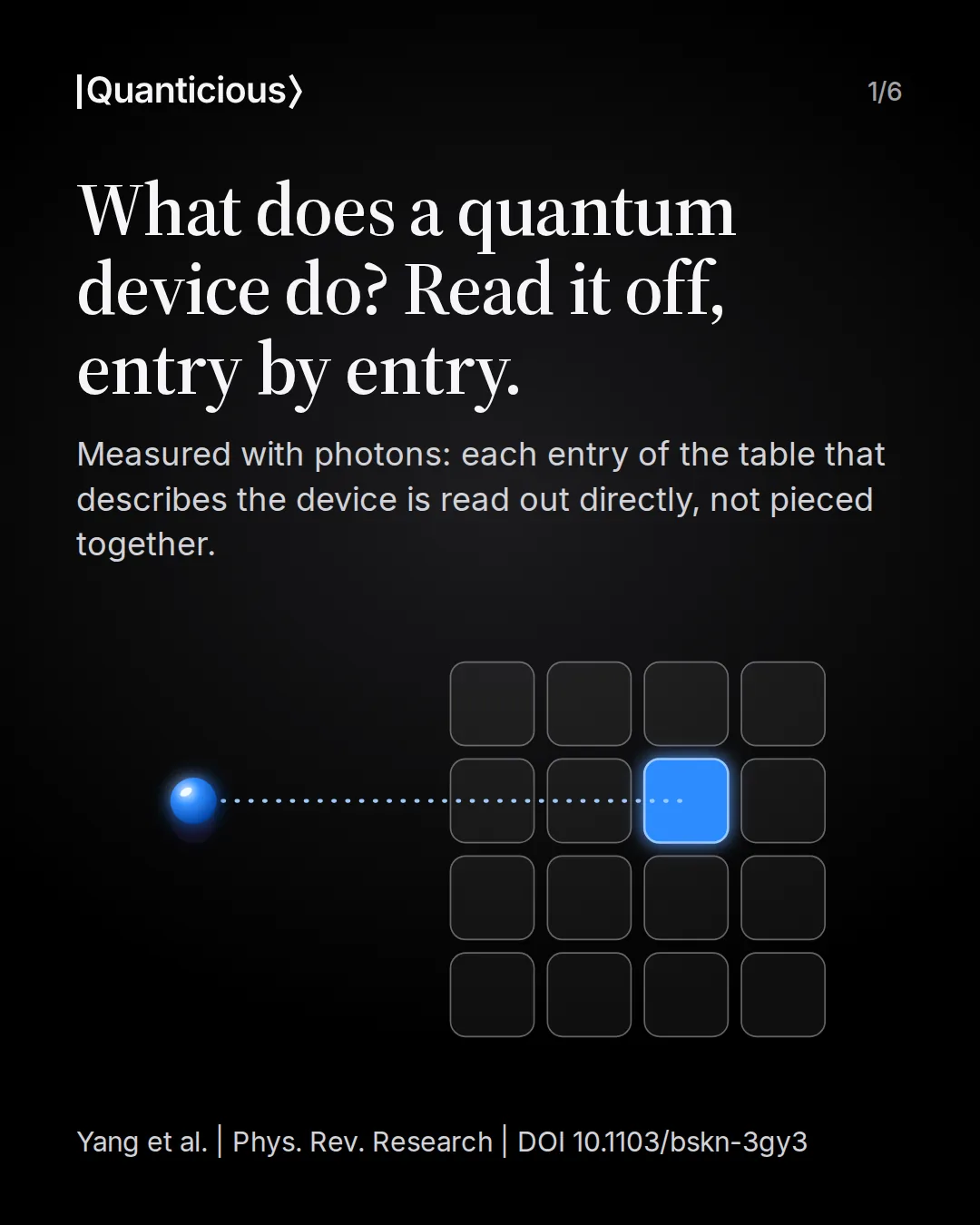
Who is allowed to forget? Entanglement as the key to erasing a quantum memory cheaply
Peer-reviewed in Physical Review Research | Theory
It turns Landauer’s erasure cost into a certifiable security property and works it through all three standard levels of device trust, in a peer-reviewed journal.
Our understanding
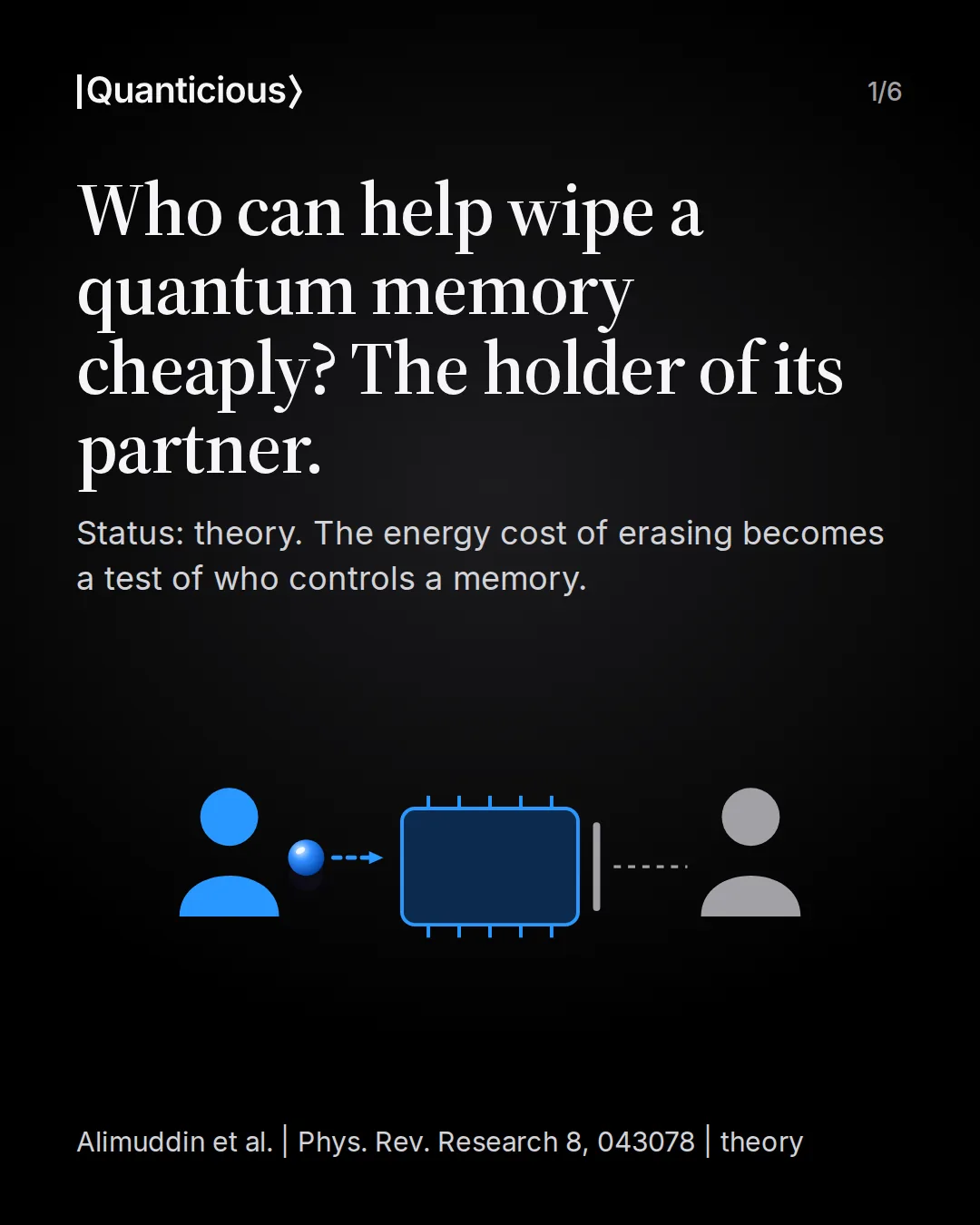
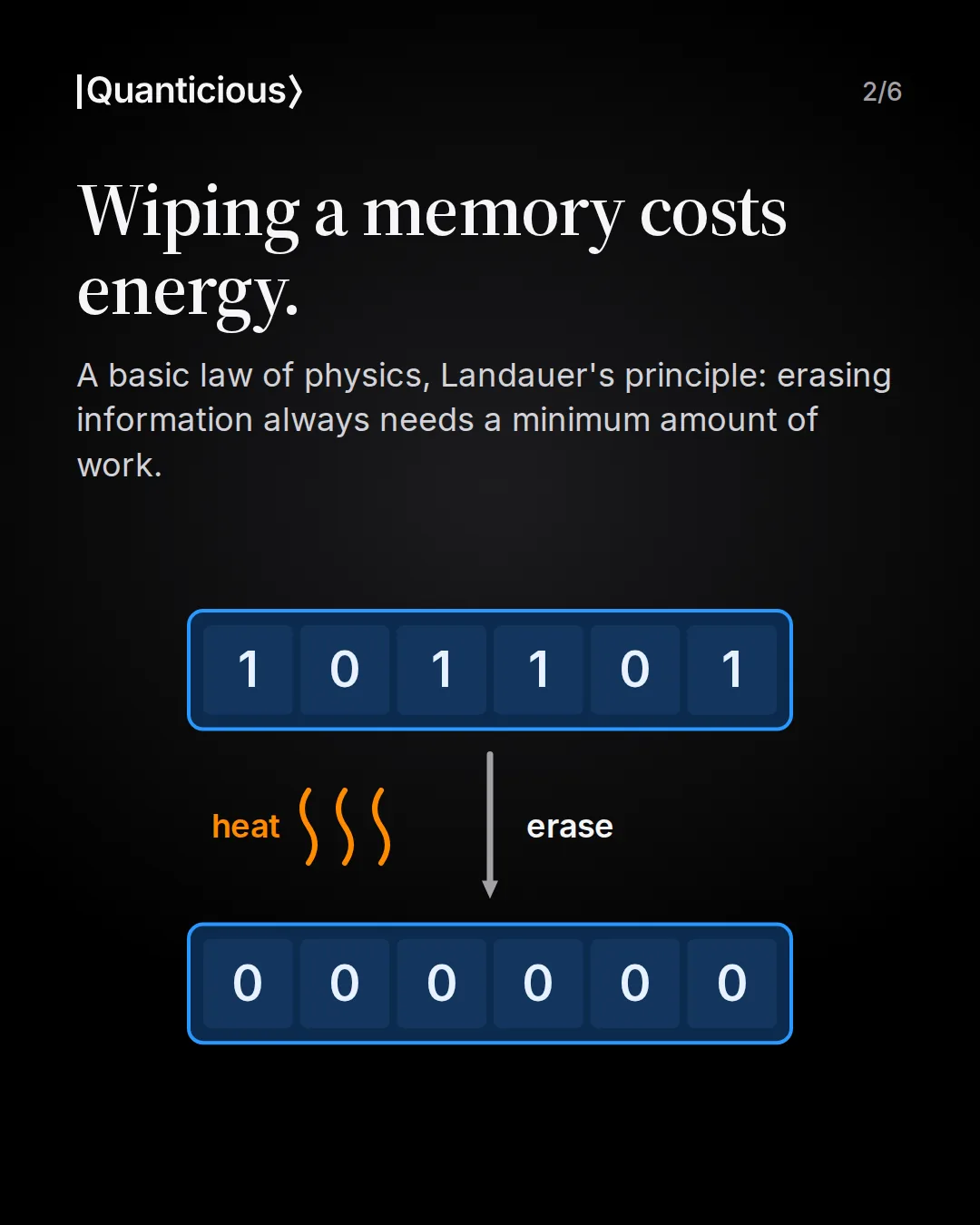
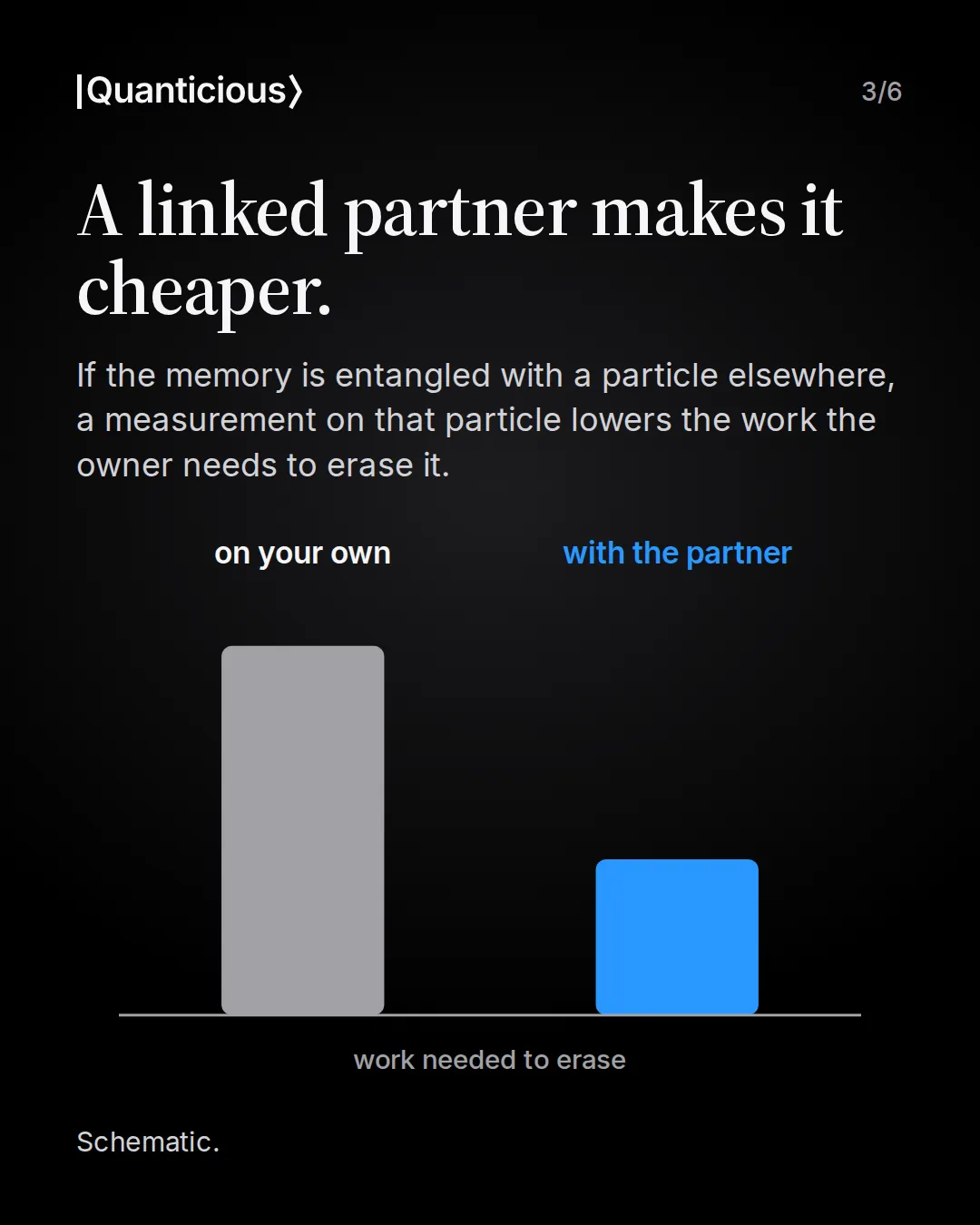
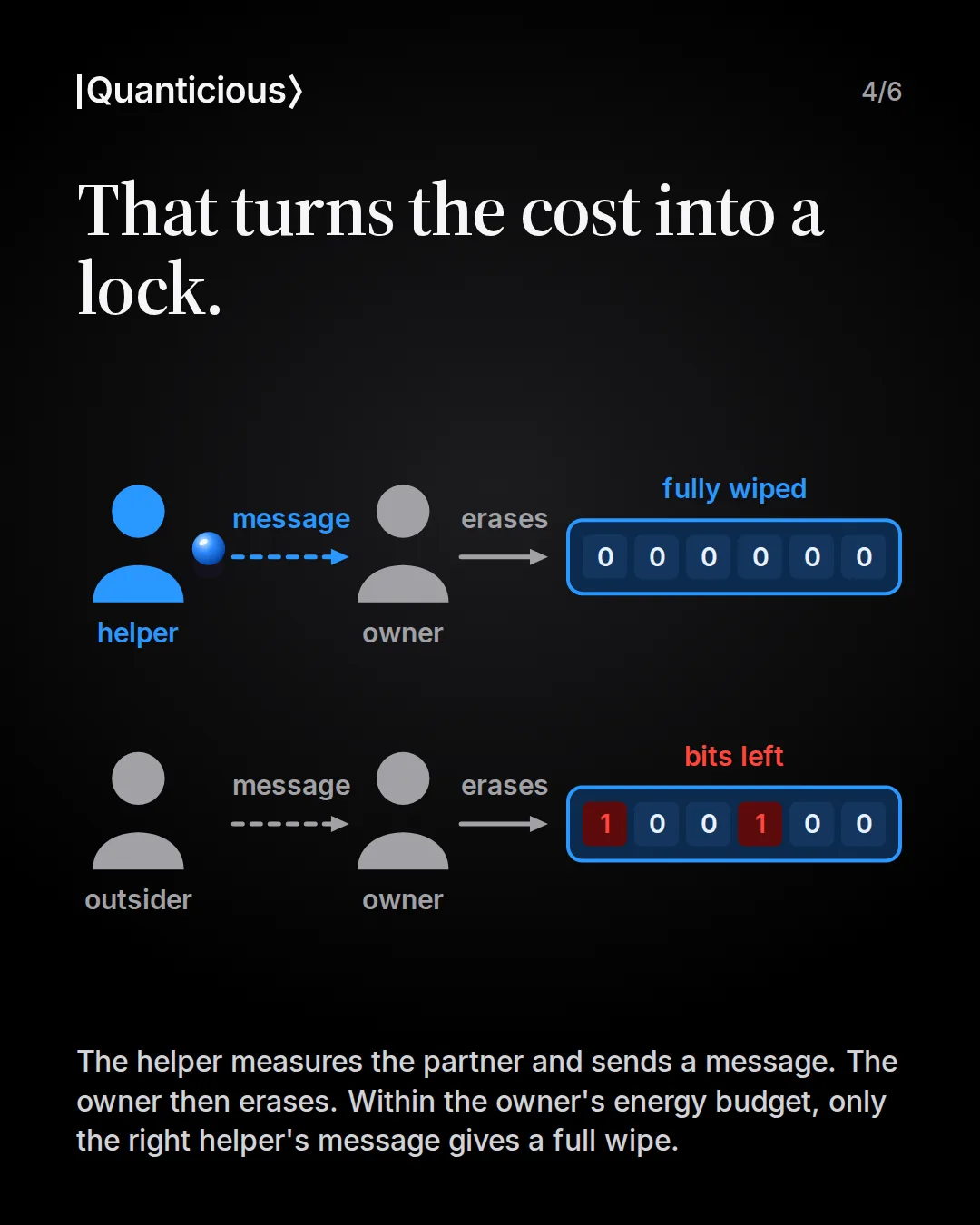
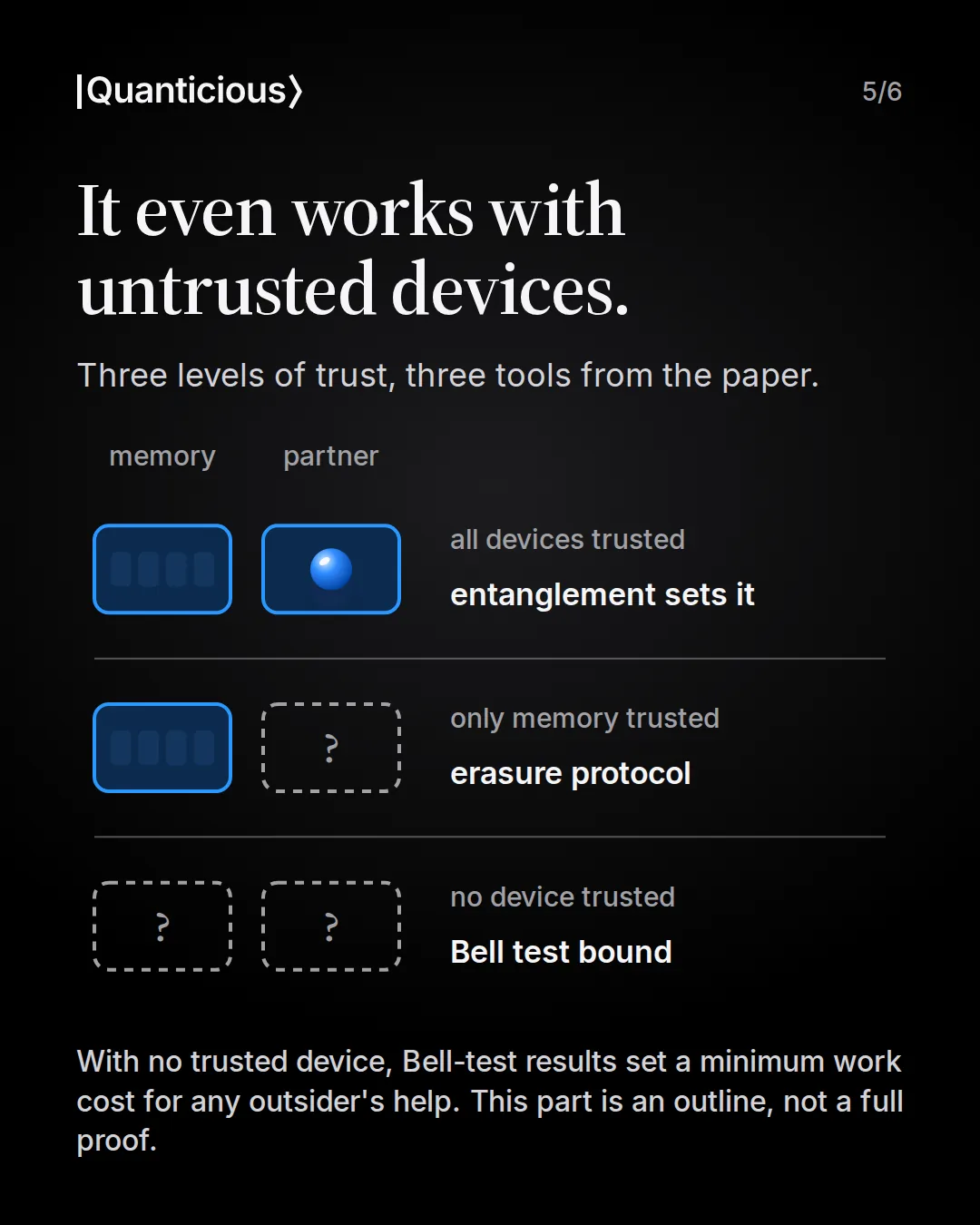
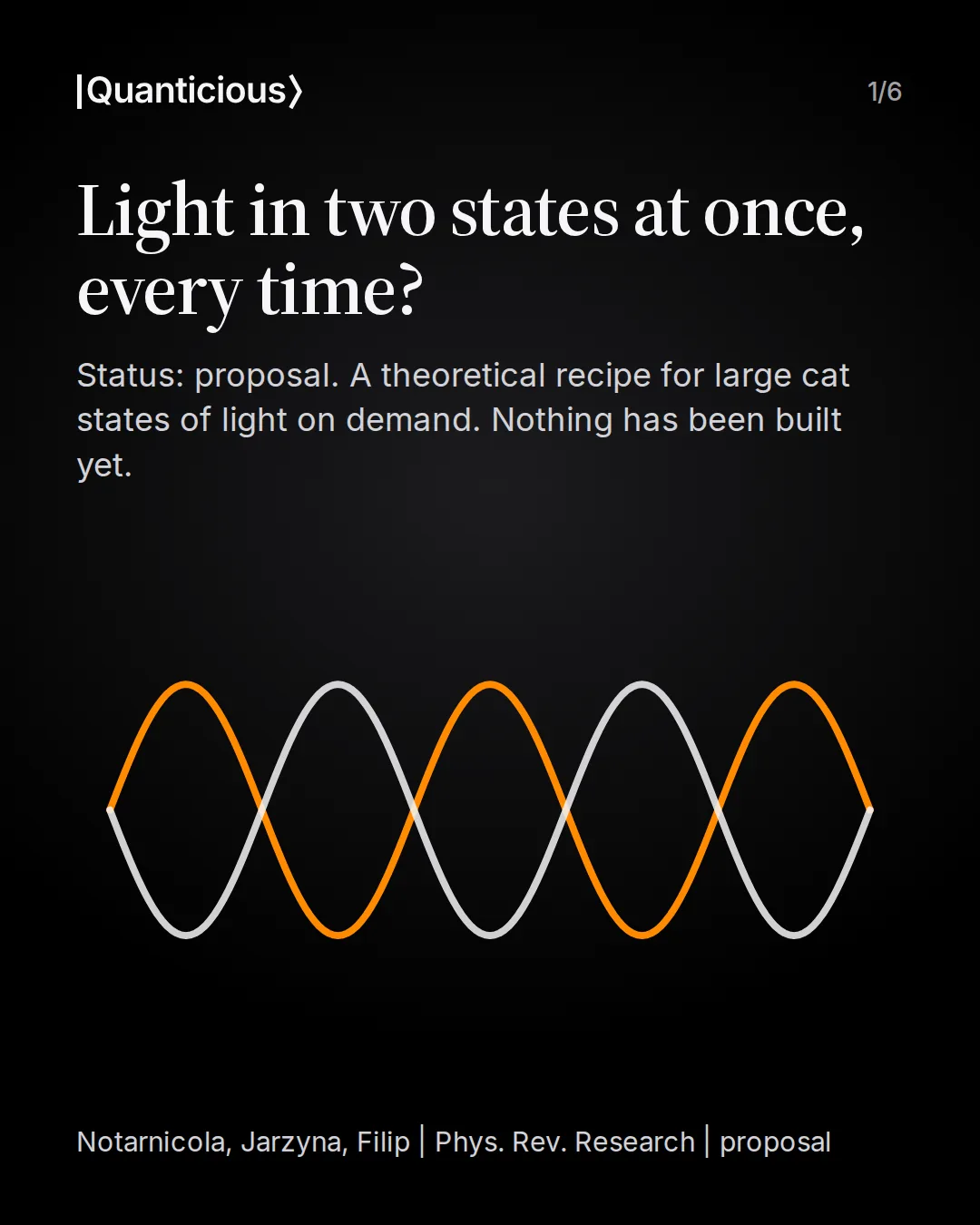
Wiping a memory always costs a little energy. That is a basic law of physics. A helper who holds a particle linked to the memory can measure it and tell the owner how to wipe the memory with less energy. The authors turn this into a test of who really controls a quantum memory: only the right helper can bring the cost down far enough, and an outsider cannot. This holds when the helper shares more entanglement with the memory than any outsider. They also show how to run the test when the devices themselves cannot be trusted. It is theory.
A few papers like this every Monday, free.
Free. Unsubscribe anytime. Privacy
The details
Key number: Two-qubit Werner state example: with two mutually unbiased dephasings, any local hidden state model needs at least 0.5 kT ln 2 of work per run, an exact theoretical bound without measurement uncertainty.
What they did
Landauer’s principle says that erasing information costs at least kT ln 2 of work per bit. If the memory is correlated with a remote system, the holder of that system can measure it and send a classical message that lets the memory’s owner erase at a lower work cost. The authors call this assisted quantum erasure. They then ask for exclusive control of erasure: only a designated helper should be able to bring the cost within the owner’s work budget, and any adversary must fail. When all devices are trusted, they prove that the helper beats an adversary if and only if the helper’s entanglement of formation with the memory exceeds the adversary’s. Separable states never give exclusive control. When only the owner’s device is trusted, they give a protocol based on random dephasing, conditional erasure and a verification step, and show that exclusive control follows once the observed cost falls below a bound that no local hidden state model can beat. When no device is trusted, they outline how Bell violations and self-testing give a lower bound on the work that erasure with any adversary’s help must still cost.
Why it matters
It links a thermodynamic quantity, the work cost of erasure, to a security property: the cost of erasing becomes a measure of exclusive control over a quantum memory. The authors also show that, if the owner first tests a small sample of copies, an untrusted helper cannot destroy more of the shared correlations than the owner chooses to erase. This is theory. The trusted-device result is a theorem, the device-independent part is an outline, the robustness results assume many identical copies, and the only worked example is a two-qubit Werner state.
What is still open
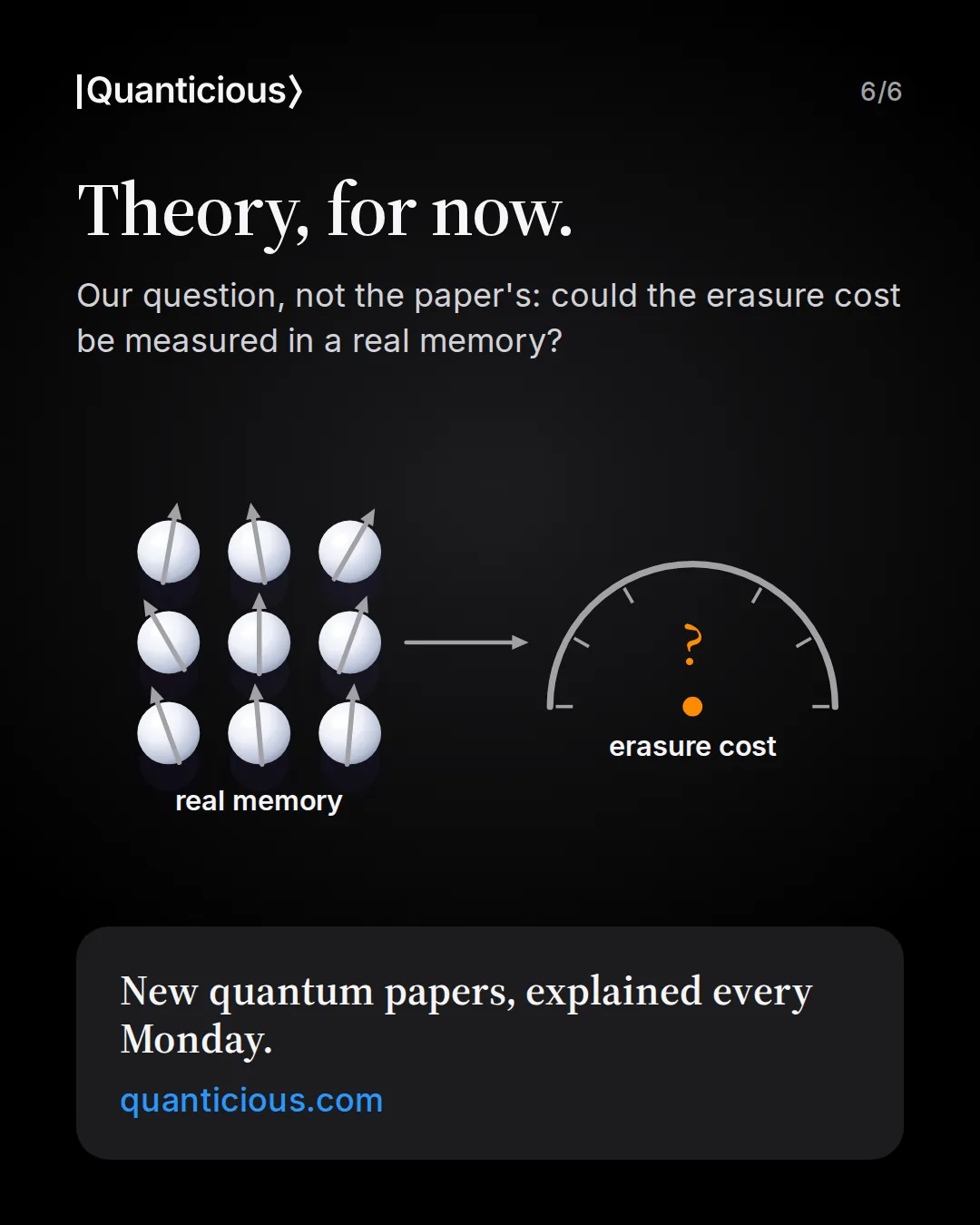
The authors leave open whether other ways of certifying steering give a larger exclusive advantage when only the owner’s device is trusted, and note that semidefinite programs could tighten the device-independent bound. Could the erasure cost be measured in a real memory, for instance a spin ensemble, with the energies involved? (our inference)
The authors note: “a nonzero Bell violation need not by itself guarantee a positive erasure-cost gap.” (arXiv:2512.05761v2, section Device-independent thermodynamic control)