Issue 1
Papers in this issue
-
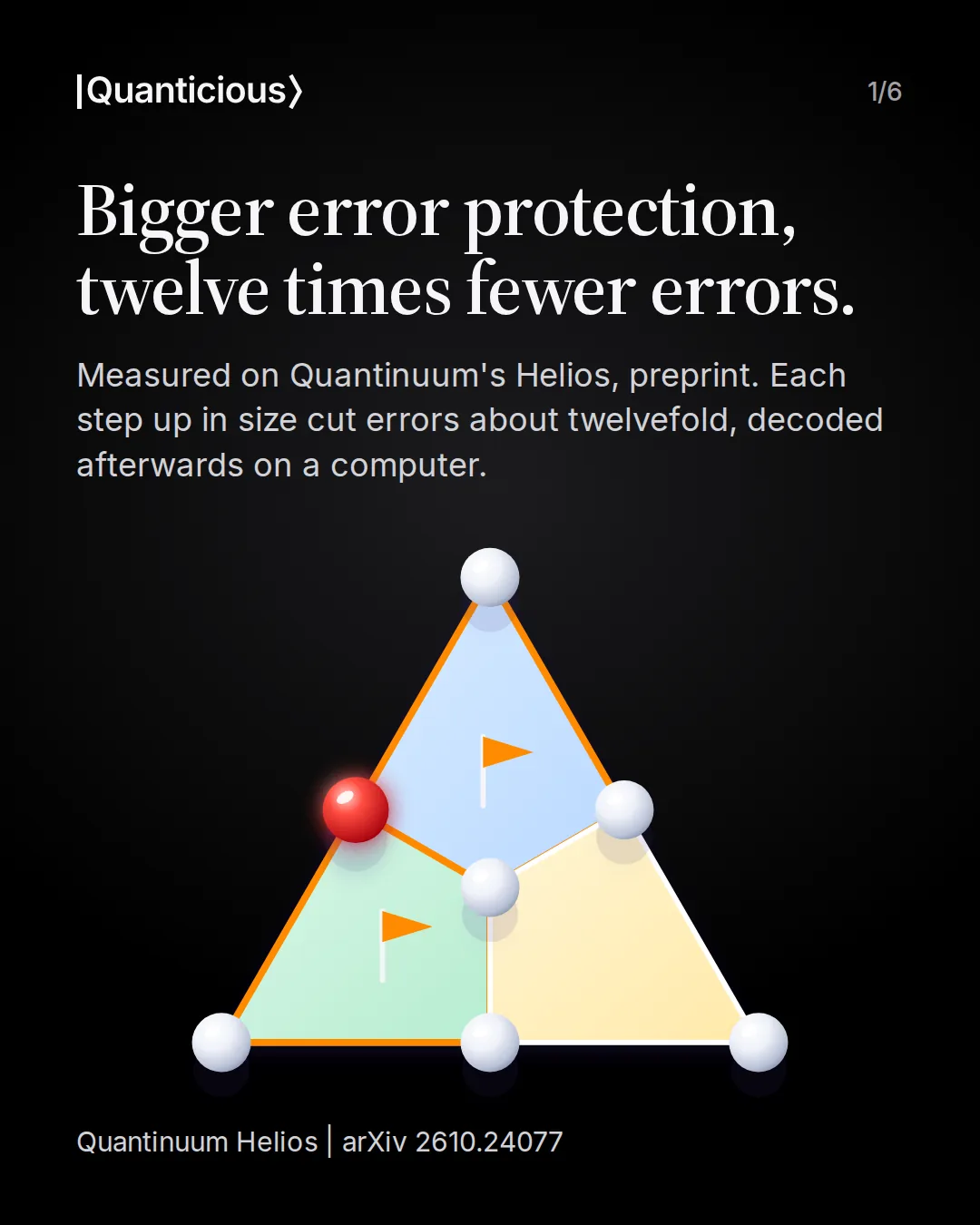
A trapped-ion processor runs error correction well below threshold
Quantum computers make mistakes. The fix is to spread each piece of information over many qubits, so that errors can be found and corrected.
-
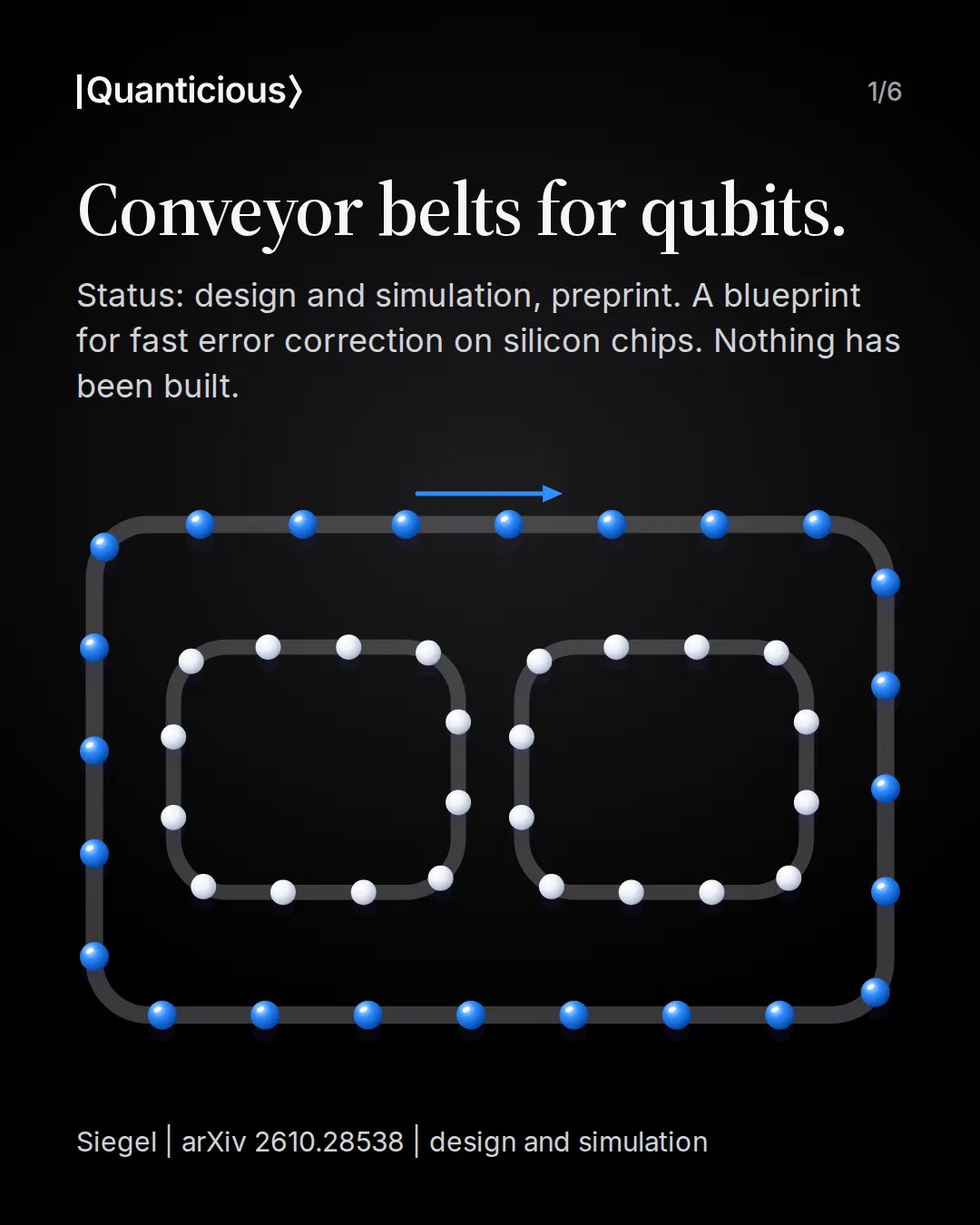
Conveyor belts for qubits: a blueprint for fast, low-overhead error correction in silicon
Some of the most efficient ways to protect quantum information need qubits that sit far apart to compare notes.
-
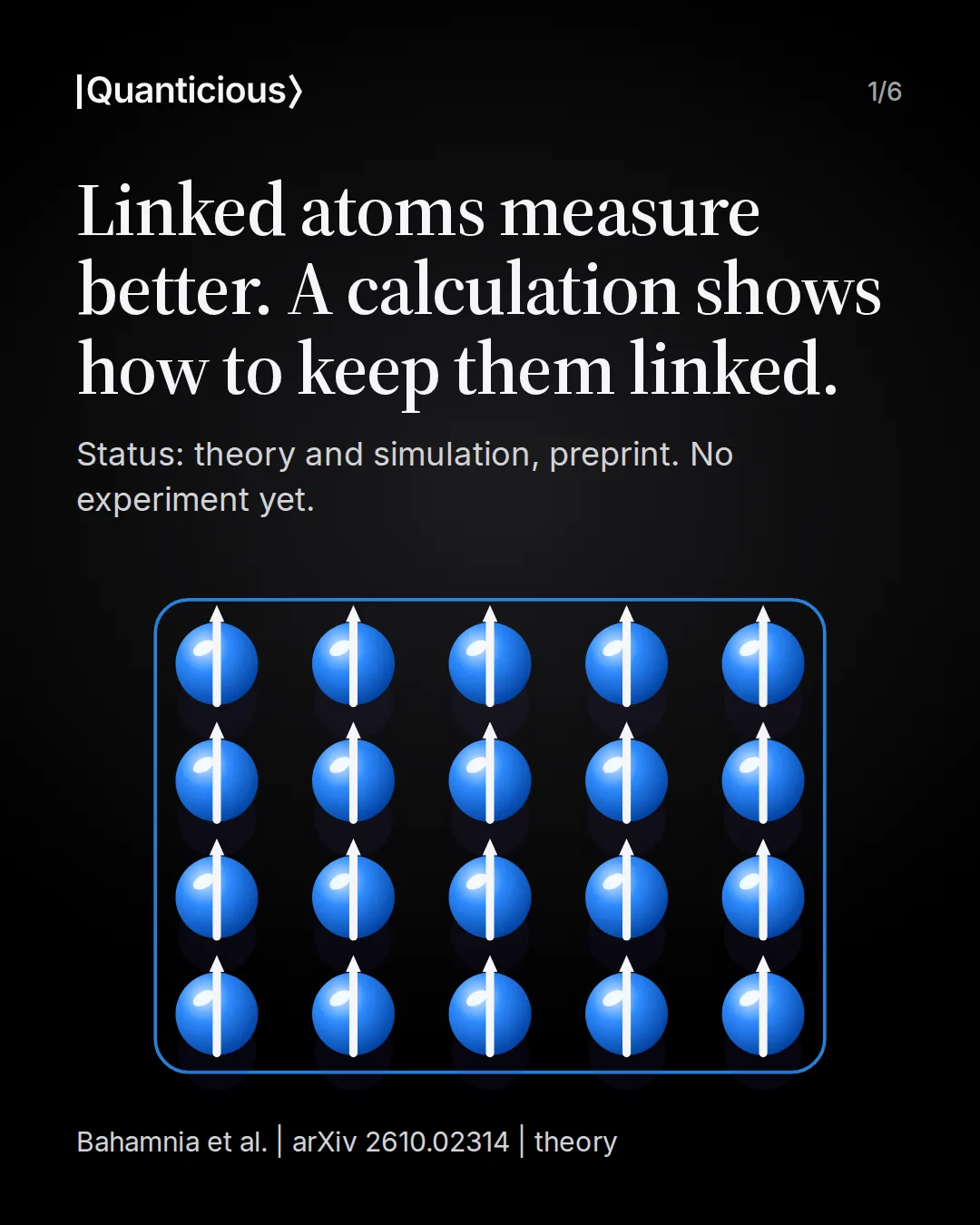
An energy gap that keeps many-level spins squeezed together
Atomic clocks and magnetic sensors become more precise when their atoms are linked so that they act as one.
-
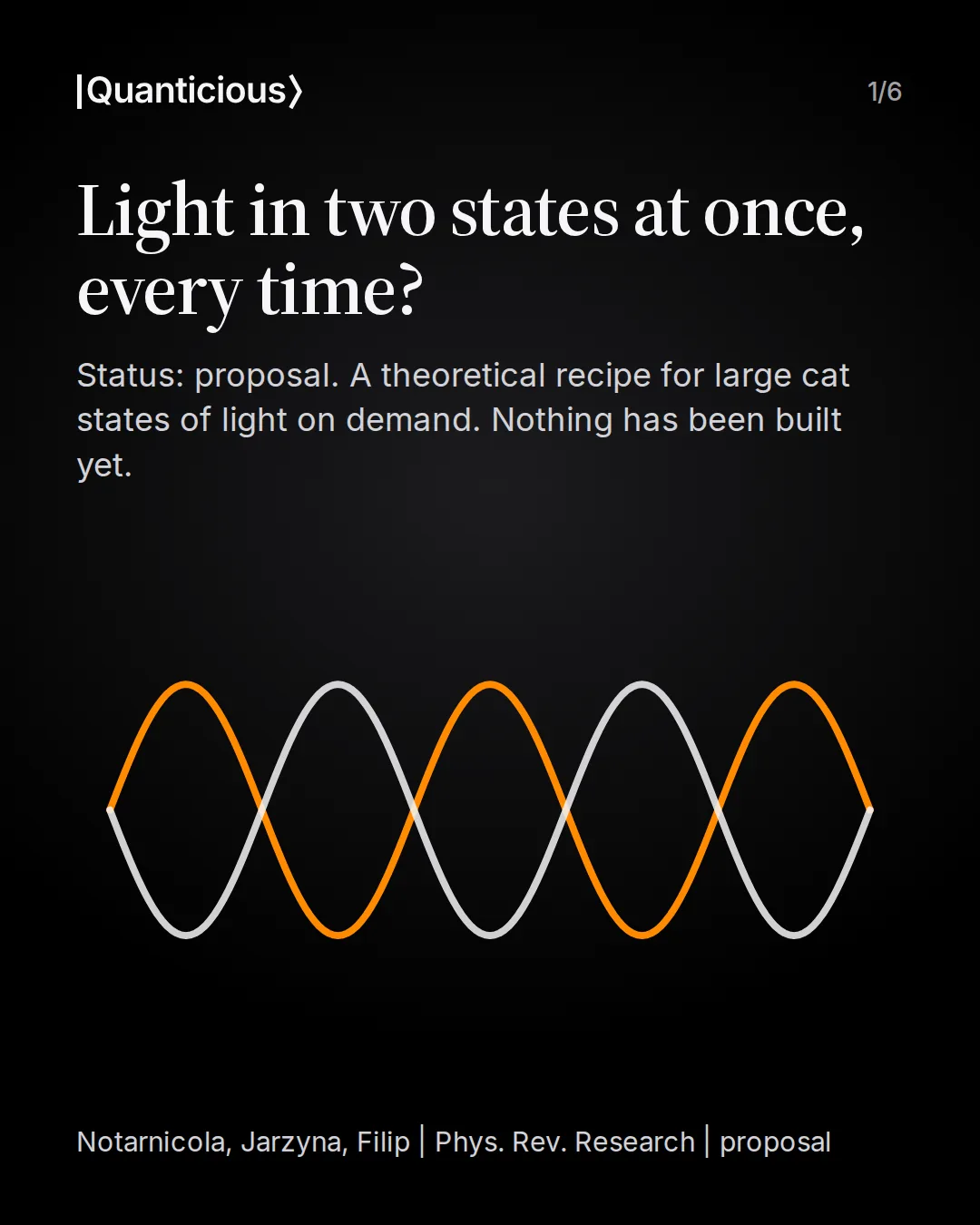
A proposal for large “cat states” of light on demand, with feedforward instead of luck
A cat state of light is a light wave that is in two very different states at once, named after Schrödinger’s famous cat.
-
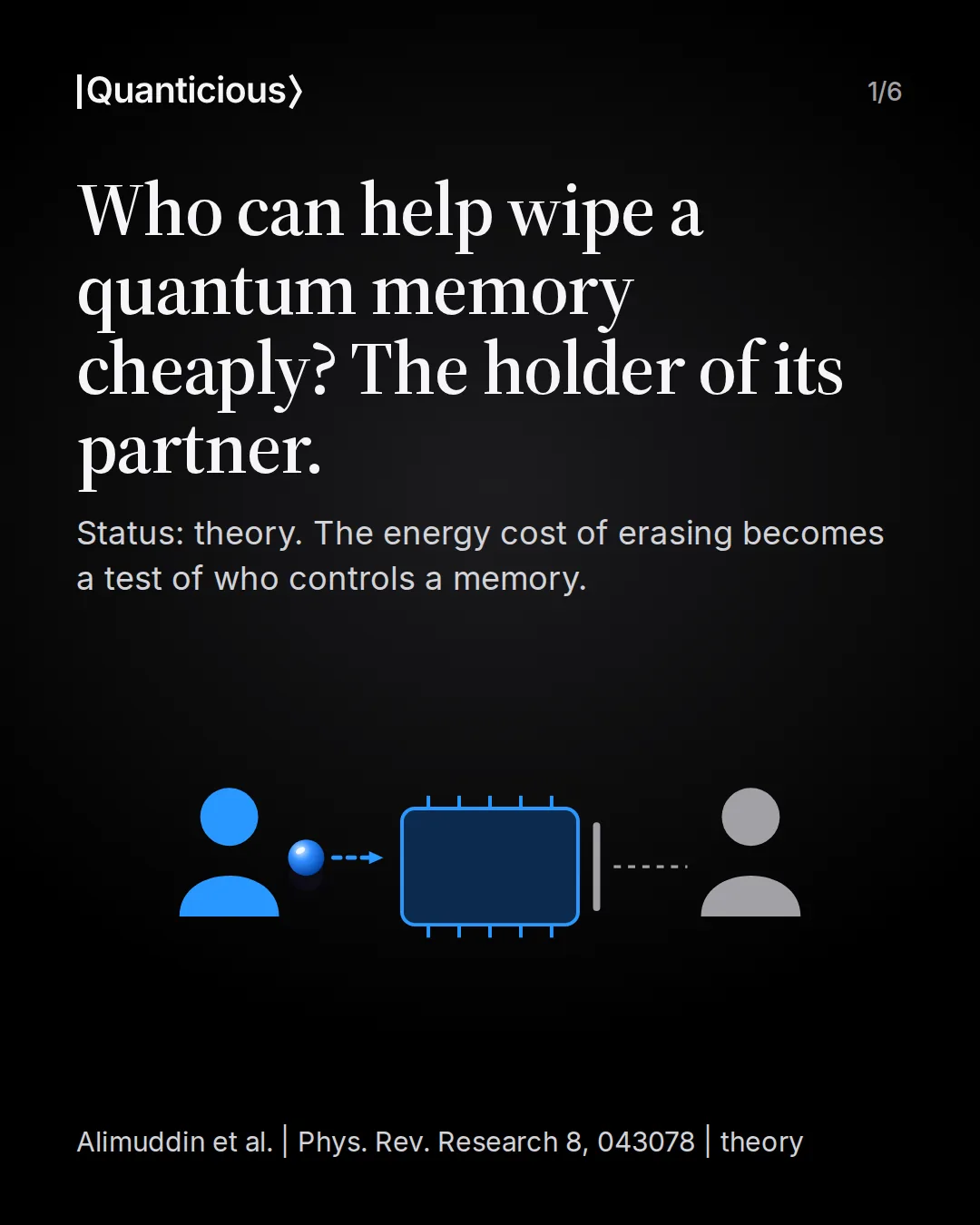
Who is allowed to forget? Entanglement as the key to erasing a quantum memory cheaply
Wiping a memory always costs a little energy. That is a basic law of physics. A helper who holds a particle linked to the memory can measure it and tell the owner how to wipe the memory with less energy.
-
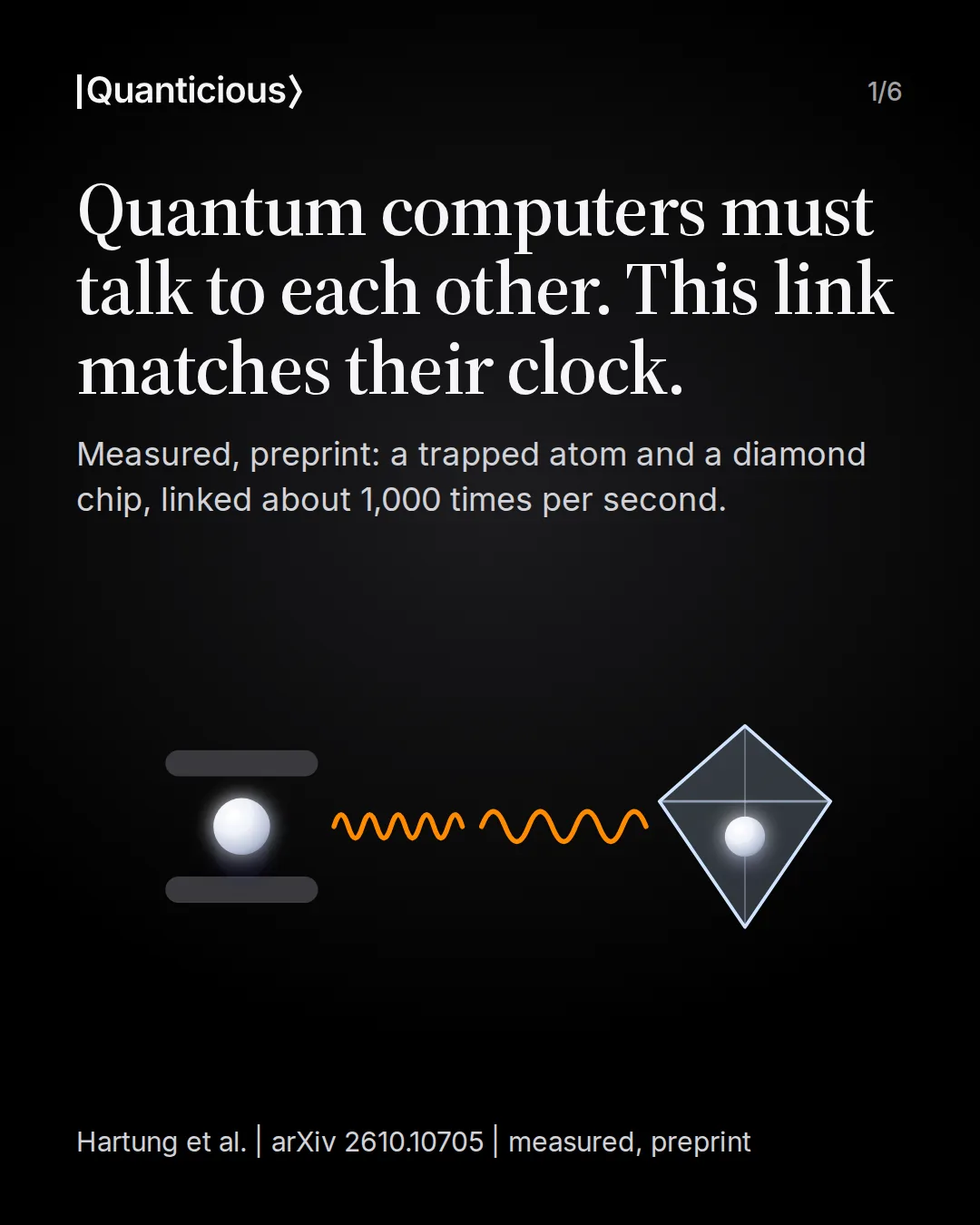
A quantum network link that runs at the speed of a quantum computer
Future quantum computers could be built from many smaller modules that have to talk to each other.
-
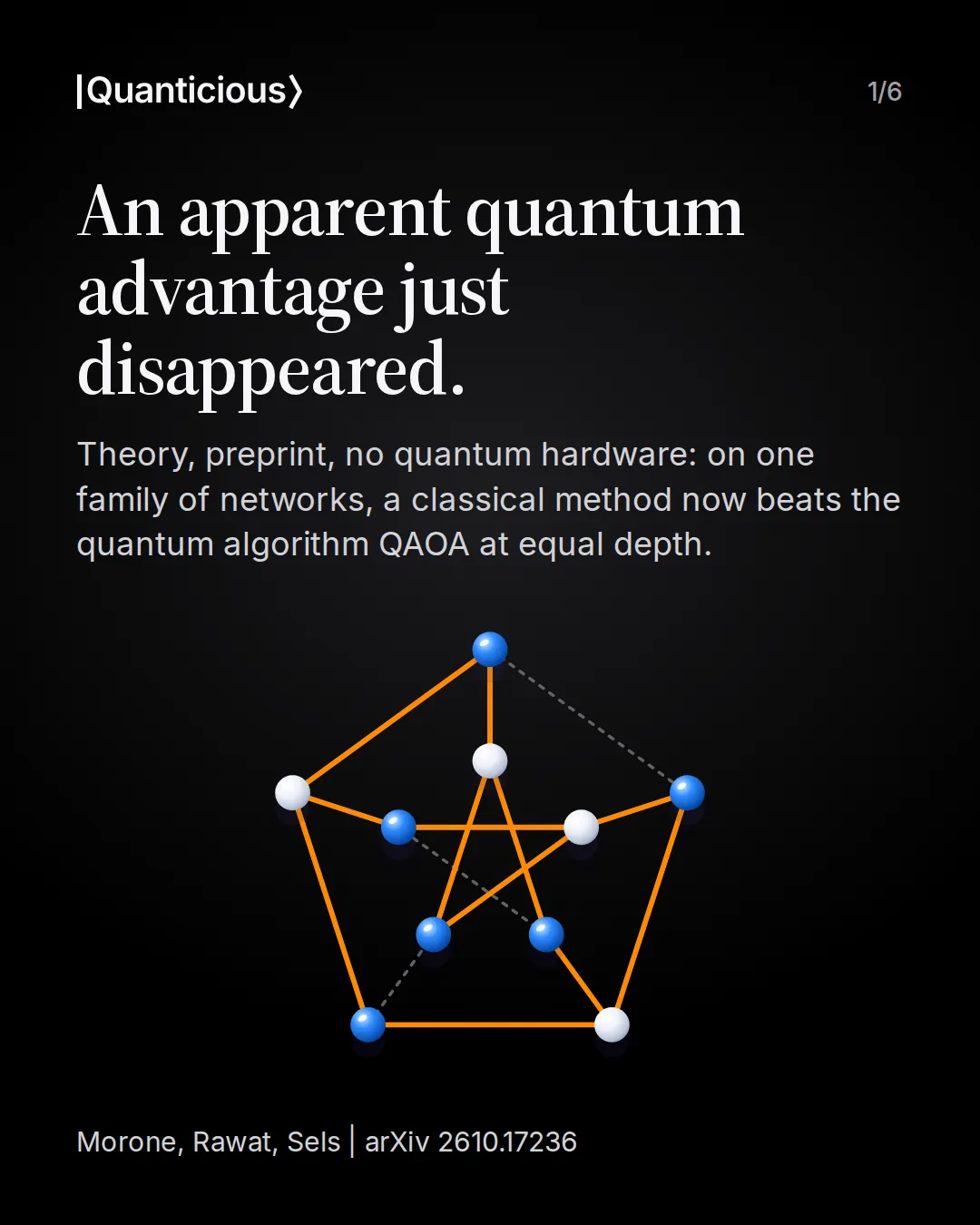
A classical algorithm moves the goalposts for “quantum advantage” in optimisation
Imagine splitting a network into two teams so that as many connections as possible run between the teams.
-
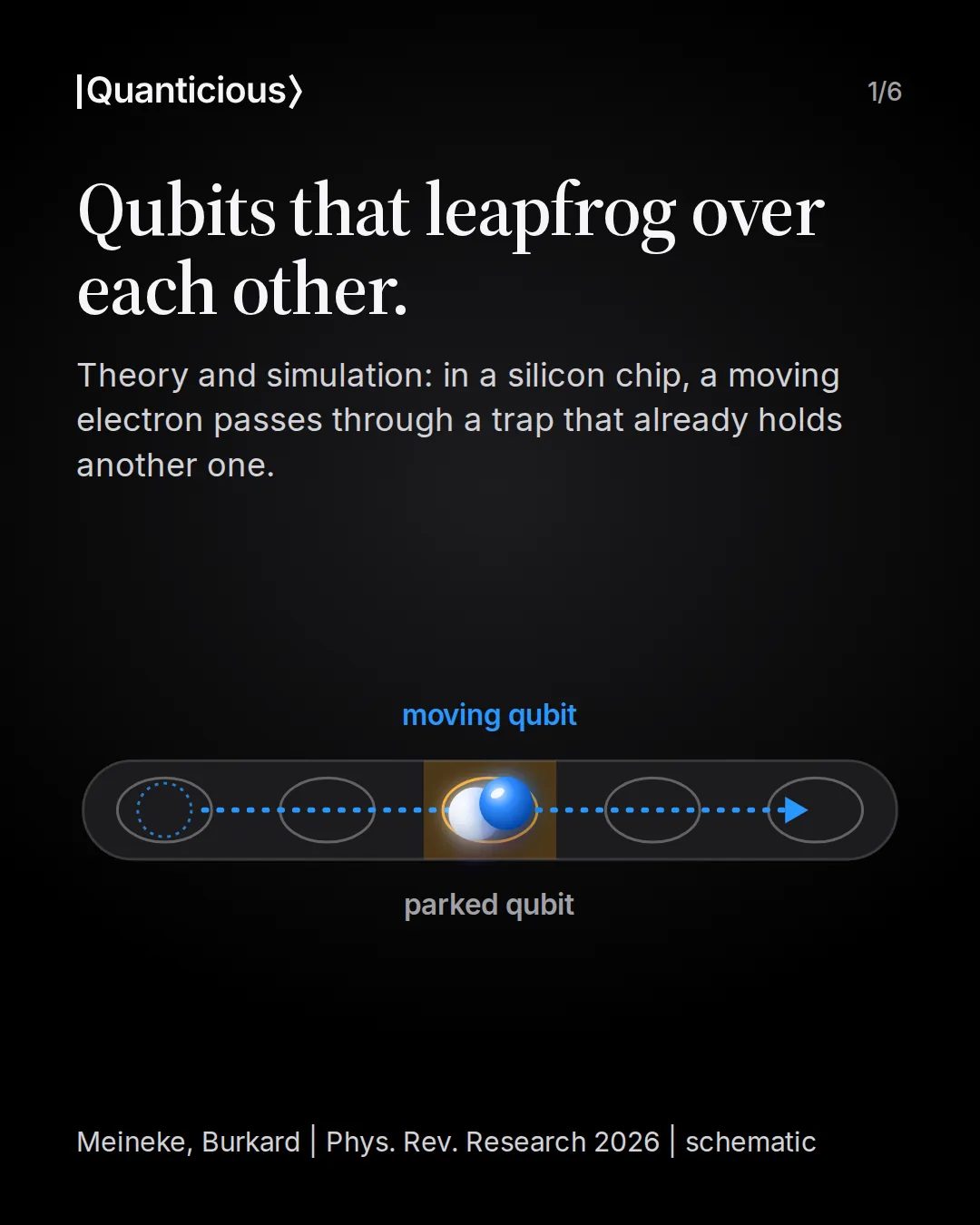
Spin qubits that leapfrog over each other
In silicon quantum chips, each qubit is a single electron, and electrons are moved along the chip like cars on a lane.
-
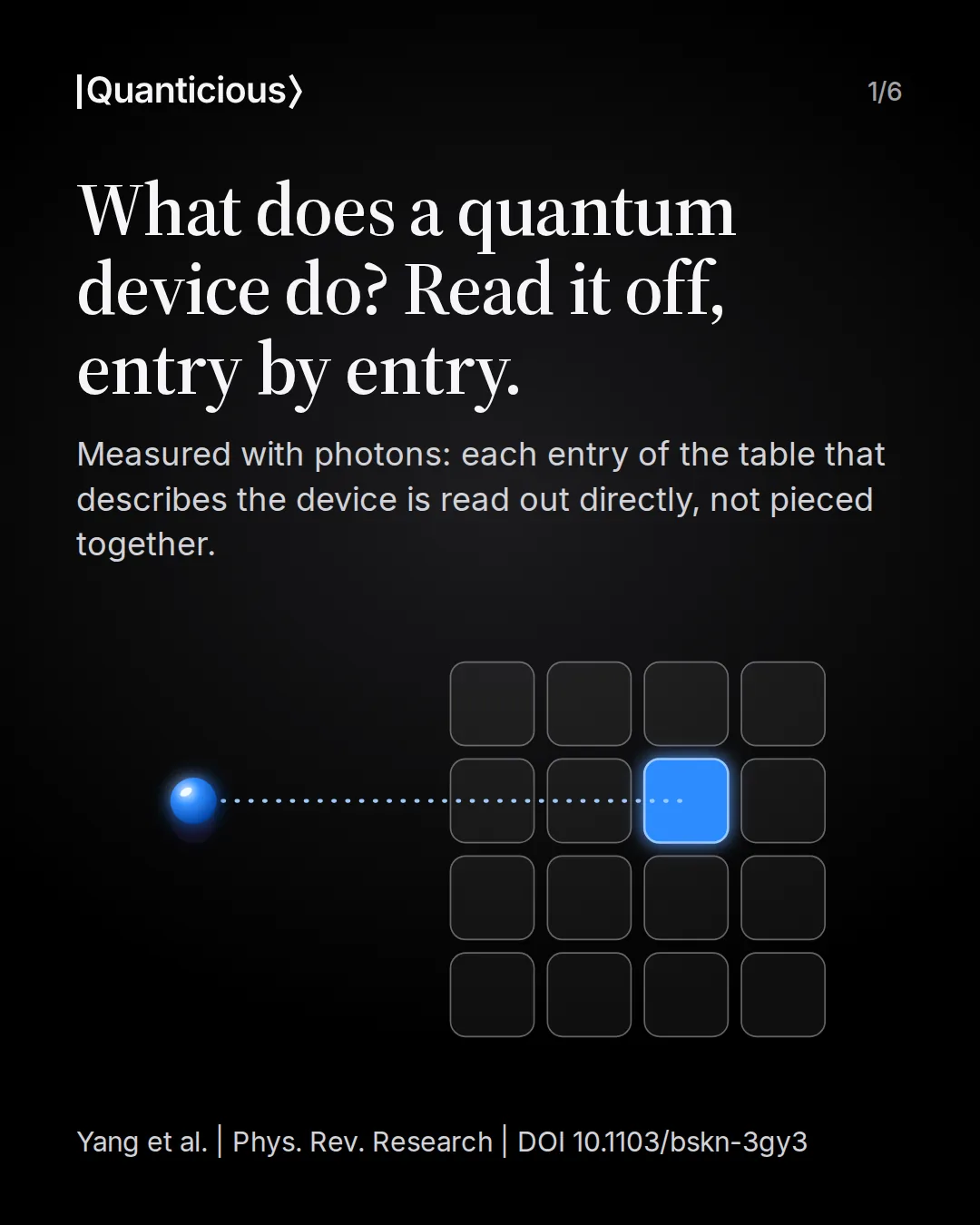
Reading out a quantum process directly, with help from an effective “time loop”
To find out what a quantum device does, physicists usually run many measurements and then put the answer together like a puzzle.
-
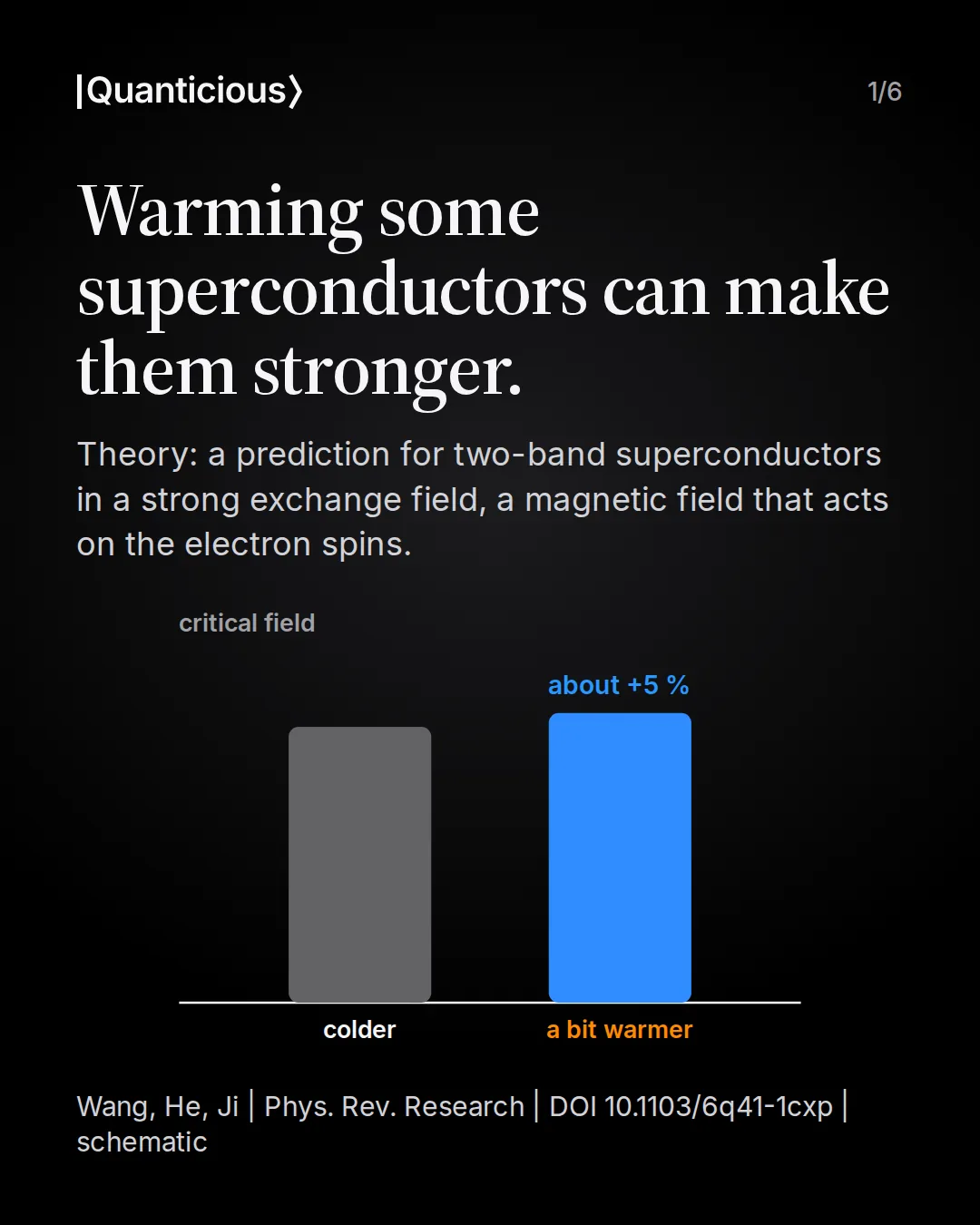
When warming some superconductors makes them stronger
Superconductors carry electricity without any loss, and heat normally destroys this.
Get next Monday’s issue.
Every Monday, five new papers as short picture series instead of formulas. For free.
Free. Unsubscribe anytime. Privacy